
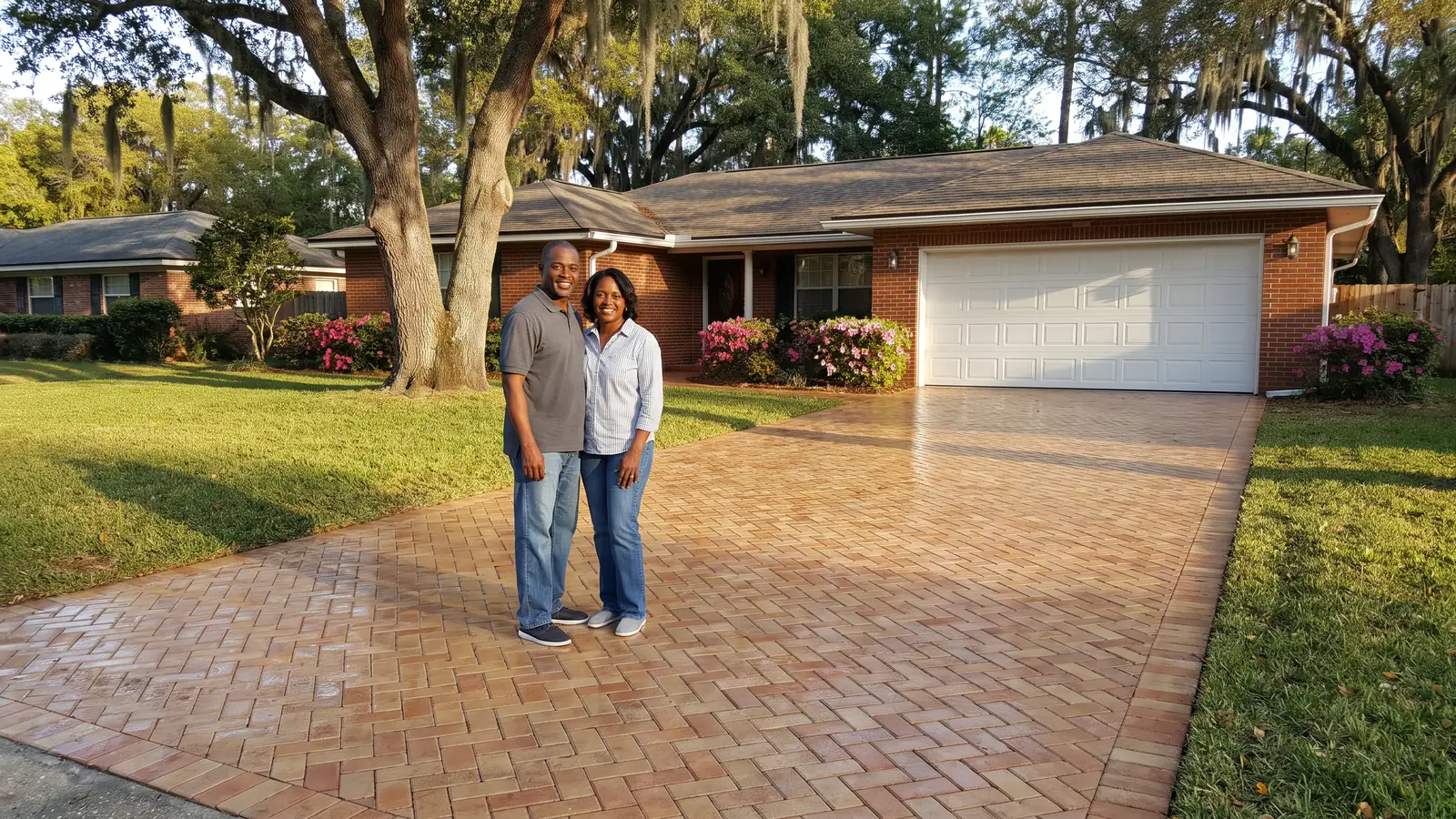
Deeper color, packed joints and easier cleanup
Paver Sealing in Orange Park, FL
For a free paver sealing estimate in Orange Park, call (904) 298-7976.
- Brings out deeper paver color
- Fresh joint sand helps lock pavers in place
- Gives weeds less room to grow
- Makes the surface easier to keep clean
- Free estimate, no obligation
Request a Free Estimate
Free, no obligations.
Is there a paver sealer near me in Orange Park, and how fast?
A contractor who works in Orange Park, FL can seal your pavers, and you will hear back within 1 business day, usually much sooner. The visit and the estimate are free, and saying no costs you nothing. To get going, call (904) 298-7976.
Sealing brings back rich color, holds joint sand where it belongs and makes it harder for oil, tannin and mildew to sink in. Picture the patio you gave up on after the oak stains spread, looking warm and even again, with the joints filled to the top. A driveway carries cars and a pool deck carries wet feet, so each surface needs its own plan. Tell the contractor how yours gets used when you ask for a free quote.
Paver Sealing Orange Park Is Proud to Serve Northeast Florida
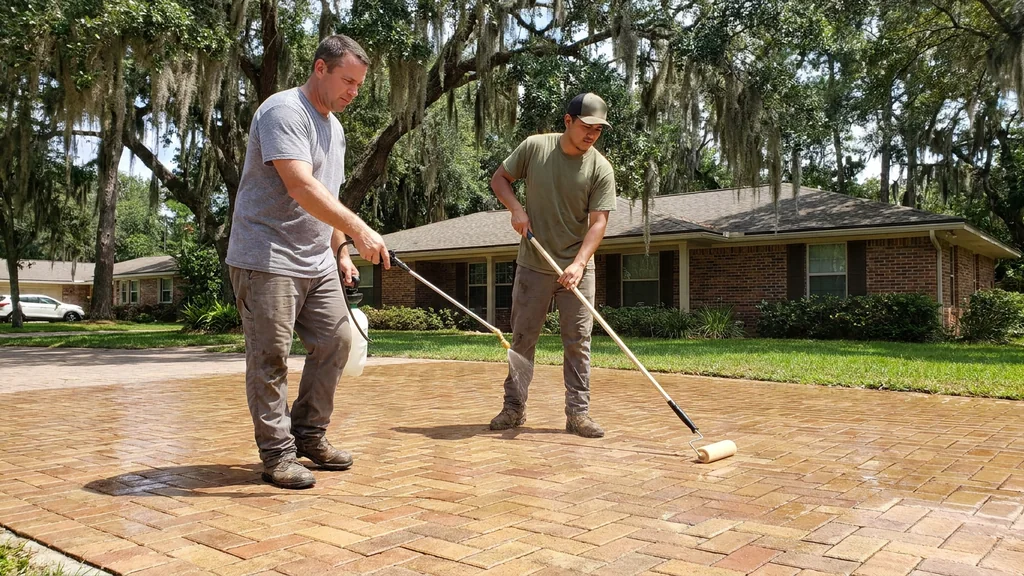
What is included when pavers get sealed?
A full job has four parts: a close inspection, a deep clean, new joint sand and the sealer coat. To go over each part for your pavers, call (904) 298-7976.
Inspection first
Low spots, cracked pieces, old coatings and drainage get a look before any price is set.
Deep cleaning
Algae, tannin, rust and white haze come off with cleaners meant for concrete pavers.
Fresh joint sand
Dry sand gets swept into every joint and settled, so the pavers lock together again.
The sealer coat
Sealer goes on dry pavers at the spread rate the maker prints on its data sheet.
What are the signs my pavers are ready for sealer?
Look for washed out color, joints that have dropped below the paver edge and water that soaks in fast instead of beading up. A Jacksonville paver company calls joint washout the problem to catch early, because empty joints are how a simple seal becomes a repair. For a second opinion on yours, call (904) 298-7976.
Which sealer holds up under Orange Park shade and sun?
No single product wins at every house, so ask the contractor which one they plan to use and why. One Jacksonville paver company puts down a two-part water-based urethane in two coats, and three on brick that has never been sealed. To compare products for your pavers, call (904) 298-7976.
Unilock favors water-based sealers when they fit the job, pointing to low odor and easy cleanup. It rates solvent-based products as a bit tougher, but they need pavers and joints that are fully dry. In a town this humid, moisture checks matter, so bring them up when you ask for a free quote.
Should I pick wet look or a natural matte finish?
Choose wet look for deep, glossy color and matte to keep the pavers close to how they looked new. Unilock cautions that high gloss sealers can get slippery when wet, which matters on a pool deck. A Jacksonville paver company uses a color-enhancing wet look as its standard and offers matte to people who want less shine. To see the two side by side, ask for a free quote.
How many years will a seal last here?
Plan on three to five years for most surfaces, which is Unilock's general guide. A Jacksonville paver company tells customers to reseal every 30 to 36 months and to clean once a year in between. To have your current coat checked, call (904) 298-7976.
Is more sealer always better?
No, extra sealer can backfire. Unilock warns that sealing too often leaves a milky haze, and Surebond, a sealer maker, says too much product can keep the surface from breathing and make it slick. The Concrete Masonry and Hardscapes Association adds that sealer gives pavers no extra strength. Ask about coverage rates when you ask for a free quote.
When is the right time of year to seal in Orange Park?
Pick a dry week, and hold off on brand new pavers until the white efflorescence has faded. Unilock says that haze usually takes two to three months to clear and can last up to a year. If your pavers went in recently, give the install date when you call (904) 298-7976.
Unilock also asks for 24 to 48 hours of dry weather around the job and temperatures from 50 to 90 degrees. Sprinklers need to stay off until the coat dries. To pick a date around the forecast, ask for a free quote.
Which parts of my yard can be sealed?
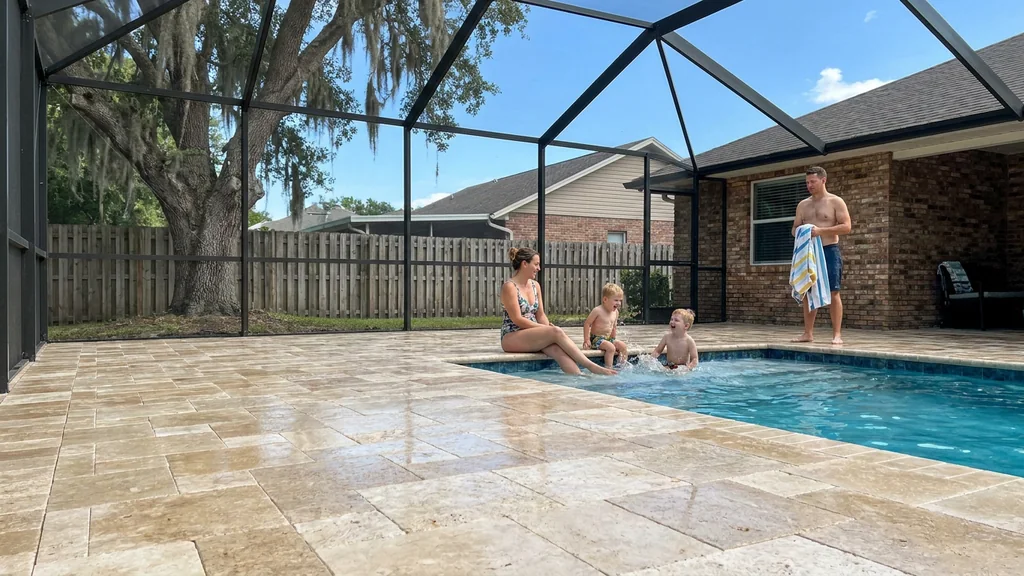
Any paved area can be sealed, from the driveway and pool deck to a patio or the front walk. Each one wears in its own way, so each one gets its own plan. To start with the spot that bugs you most, ask for a free quote.
Driveways
Car tires, engine drips and full afternoon sun hit the driveway harder than any other spot. Sealing on a drive is about keeping the color even and the joints packed under that weight.
Pool decks and screened lanais
Pool water, sunscreen and wet feet keep this surface damp most of the year. Sealing by the pool has to leave good grip as well as good looks.
Back patios
Patios tucked under oaks stay shaded and wet, and that is where green film and leaf stains start. Sealing on a patio goes after that growth first.
Front walks and garden paths
Walks next to flower beds collect mulch, soil and sprinkler spray. Sealing here is a small job that changes the first thing guests step on.
What wears down pavers in Orange Park?
Five problems top the list here: oak tannin, damp shade, lost joint sand, sprinkler rust and sun fading. Most creep up slowly and then seem to show up overnight. To find out which ones you have, call (904) 298-7976.
1. Tannin stains under the oaks
UF/IFAS Extension notes that water oak acorns can stain concrete and that live oaks spread 60 to 120 feet. An Orange Park washing company treats tannin on older drives that sit under that canopy.
2. Damp, green shade
Lots near Doctors Lake stay damp, according to the same Orange Park company. Wet, shaded pavers grow algae, and a green walk turns slick after rain.
3. Joint sand lost to summer storms
The Concrete Masonry and Hardscapes Association says paving that takes regular heavy rain benefits from stabilized joint sand. Afternoon storms here wash loose sand out and invite weeds and ants.
4. Orange rust from irrigation
UF/IFAS Extension says most Florida well water carries a lot of iron. Sprinklers that hit the same edge every day leave orange marks that must come off before sealing.
5. Color faded by the sun
A Jacksonville paver company says pavers left unsealed lose color in the sun until the smooth top wears off and small stones show through. Open driveways with no shade fade first.
What does paver sealing cost in Orange Park?
Plan on $1.75 to $3.25 per square foot to have pavers cleaned, sanded and sealed in Orange Park. An Orange Park company gives that as the usual First Coast range, and a Jacksonville company's 2026 price guide adds $0.75 to $1.50 per square foot when failed sealer must be stripped. Square footage drives the total first, then condition. To turn these ranges into a real number, ask for a free quote.
Only need a wash? Read about paver cleaning and joint sand, see the towns on the list or go back to Orange Park paver sealing.
| Paved area | Typical example | Clean, sand and seal |
|---|---|---|
| 300 sq ft | Small patio or walkway | $525 to $975 |
| 600 sq ft | Two car driveway | $1,050 to $1,950 |
| 1,000 sq ft | Large driveway or pool deck | $1,750 to $3,250 |
| 1,500 sq ft | Driveway plus pool deck | $2,625 to $4,875 |
Math based on the $1.75 to $3.25 per square foot that Northeast Florida paver companies published as of November 2026. Your contractor sets the actual price after seeing the surface. Repairs, leveling and stripping failed sealer are usually extra.
Why hire a contractor who works around Orange Park?
A contractor based nearby sees oak stains, damp shade and rusty sprinkler lines all year. You still get the price in writing and as long as you like to decide. To begin, call (904) 298-7976.
Contractors who know Clay County
A company working around Orange Park is used to oak stains, damp shade and sprinkler rust. You do not have to explain the basics before the real talk starts.
A free price, no strings
The visit and the quote cost nothing. If the number does not suit you, say no and that is the end of it.
Real local numbers to check against
First Coast companies post their per square foot rates, and this site shows them. You can tell at a glance whether a quote sits in the normal range.
You set the pace
Get the quote in writing and sleep on it. The contractor standards page lists the questions worth asking first.
Want a free sealing estimate in Orange Park?
Call or use the short form, and a reply should come within 1 business day, usually much sooner.
Free, no obligations
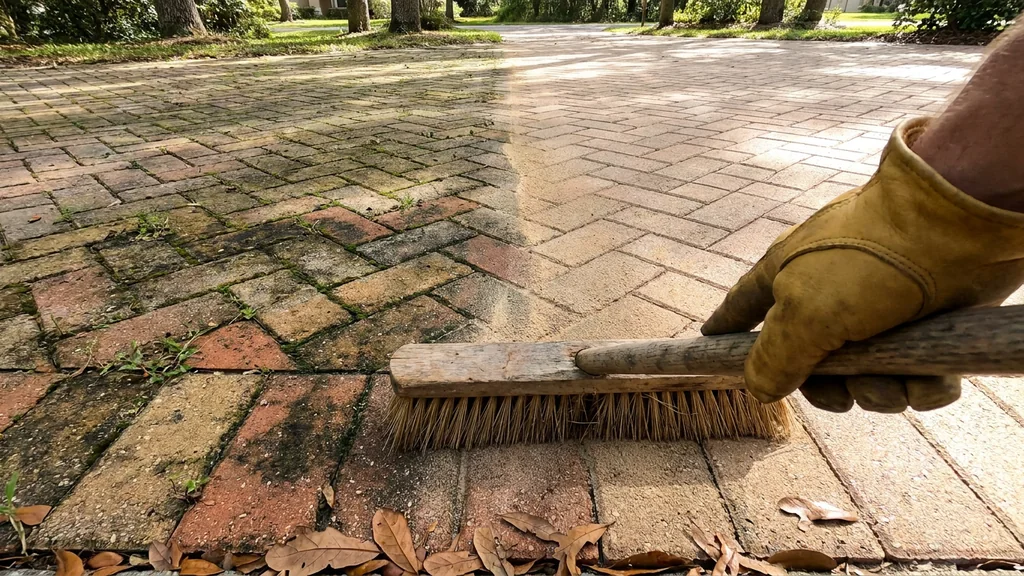
How does the paver sealing process run, step by step?
The work moves through five steps, from the first look to the final walk. To get on the calendar, call (904) 298-7976.
1. Walk the pavers
Before quoting the sealing work, the contractor checks for low spots, cracked pieces, old coatings and places where water sits after rain.
2. Cover and wash
Beds get covered and the sprinklers get turned off. A surface cleaner or a wide fan tip then washes the pavers without blasting out the sand.
3. Treat the hard stains
Rust, oak tannin and white efflorescence each get a cleaner made for that stain, tested on a small patch first.
4. Refill the joints
Once the surface is dry, new joint sand gets swept in and settled with a plate compactor, and the extra gets blown off.
5. Seal and look it over
If sealer is part of the plan, it goes on with a low pressure sprayer and a roller. You then walk the area with the contractor and learn when it is safe to use.
Frequently Asked Questions
How much does it cost to seal pavers in Florida?
On the First Coast, figure $1.75 to $3.25 per square foot to clean, sand and seal, which is the range an Orange Park company lists. An 800 square foot Orange Park driveway would land near $1,400 to $2,600.
Why is paver sealing so expensive?
Most of the bill pays for labor and prep, not the sealer. A Jacksonville company's 2026 price guide says a fair price covers a deep clean, new joint sand and two coats of sealer. It also warns that quotes under $1 per square foot usually mean prep is being skipped.
What do professionals use to seal pavers?
Most use a water-based or solvent-based paver sealer, sprayed on at low pressure and spread with a roller. One Jacksonville paver company uses a two-part water-based urethane. Ask for the product name and its data sheet before the work starts.
How often do you need to reseal pavers in Florida?
Every three to five years is Unilock's general guide. A Jacksonville paver company suggests every 30 to 36 months, with a yearly cleaning in between. Shade, sun and sprinklers move that number for each surface.
Can new pavers in an Orange Park subdivision be sealed right away?
Not right away. Unilock says to wait until efflorescence, the white haze on new concrete pavers, has cleared, which usually takes two to three months.
Will a wet look sealer make an Orange Park pool deck slippery?
It can, so ask about the finish and grip. Unilock says high gloss sealers may add slipperiness when wet and calls matte the safer pick. Surebond, a sealer maker, says pool decks may need an anti-slip additive.
How long should you keep off newly sealed pavers?
Plan to keep cars and people off for up to two days. Unilock asks for up to 48 hours of dry weather while sealer cures, and a Jacksonville paver company says its sealer cures in about 24 to 48 hours. Leave the sprinklers off for that stretch too.