
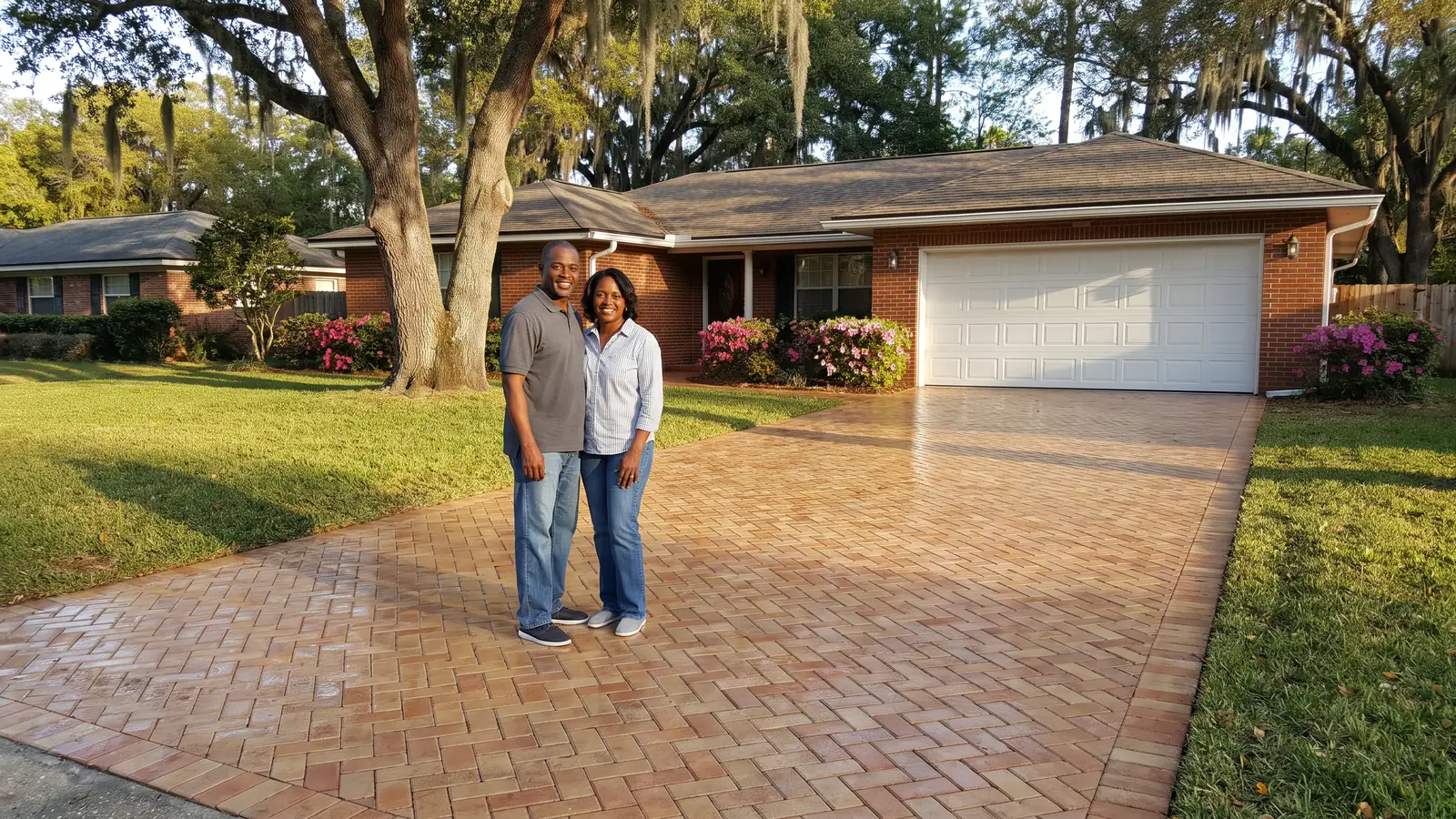
Paver sealing for Saint Johns homes
Paver Sealing in Saint Johns, FL
Pavers fading in Saint Johns? Get local help from Paver Sealing Orange Park. Call (904) 298-7976
- Brings out deeper paver color
- Fresh joint sand helps lock pavers in place
- Gives weeds less room to grow
- Makes the surface easier to keep clean
- Free estimate, no obligation
Request a Free Estimate
Free, no obligations.
Fast, careful paver sealing help in Saint Johns
Paver sealing in Saint Johns is open to homes from RiverTown on the river to SilverLeaf down past County Road 210. A local contractor washes the pavers, refills the joints and puts down the sealer, and the estimate costs nothing. Ask when you ask for a free quote, and you should hear back within 1 business day, usually much sooner.
Maybe your builder pavers looked crisp the week you moved in, and now there is a gray haze, weeds in the joints and orange marks by the sprinklers. A cleaning, new sand and a fresh coat bring back that move-in look. Water rolls off instead of soaking in. If you want to talk it through first, call (904) 298-7976.
Why Saint Johns chooses Paver Sealing Orange Park
Saint Johns homeowners often pick a nearby paver contractor because new construction, assigned watering days and flatwoods soil all affect the work. To learn how that plays out in your subdivision, ask for a free quote.
A no-cost visit
A contractor comes to your Saint Johns home, measures the pavers and gives you a price. You can take it or leave it.
A rate to measure against
Northeast Florida companies post prices of $1.75 to $3.25 per square foot for cleaning, sanding and sealing. Weigh each bid against that.
Matte or wet look
A matte finish keeps builder pavers looking natural. A wet look deepens the color but shows scuffs sooner on a busy drive.
You set the terms
Pick the finish, the date and whether to move ahead at all. A Saint Johns estimate is free and you owe nothing.
Get Your Free Estimate in Saint Johns
Tell us about your pavers in Saint Johns.
Free, no obligations
What paver problems show up most in Saint Johns?
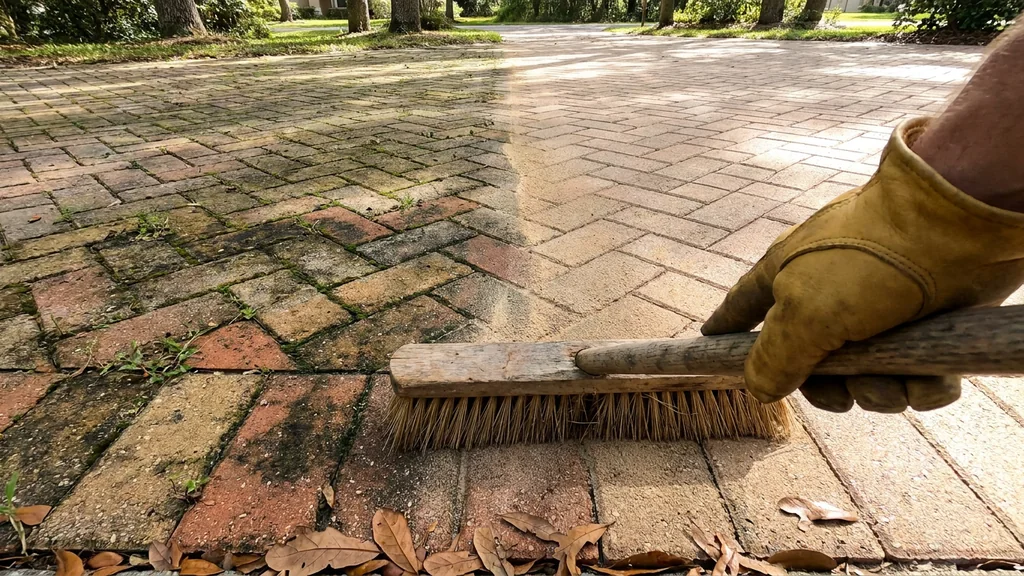
White haze on newer pavers
Much of Saint Johns is new, from Durbin Crossing, which broke ground in 2005, to SilverLeaf sections still being built. New concrete pavers often grow a white film called efflorescence in their first season or two. One Jacksonville company says to wait 30 to 60 days after install before the first coat so that film can work out. Sealing too early can trap the haze under the coat. The haze is harmless, but a coat on top makes it look permanent. Ask your builder or installer for the install date before booking. Many SilverLeaf and RiverTown homes are only a few years old, so this comes up often.
Orange streaks and black mildew from sprinklers
St. Johns County assigns watering days, and Silver Landing in SilverLeaf was the first area to get address-based times. Even on a schedule, sprinklers that reach the pavers leave a mark. If the water comes from a private well, the iron common in Florida well water can leave orange streaks. Shaded spots that catch spray also grow black mildew fast, one Jacksonville company says. Sealer would lock those marks in, so they get treated during cleaning. Pointing spray heads at the grass instead of the drive slows the return.
Wet ground in the flatwoods
Much of this part of Florida is flatwoods, and the USDA Myakka series found there is poorly drained sand. In most years its water table sits within 18 inches of the surface for one to four months. That slow drainage can keep a Saint Johns patio damp after rain. Pavers have to be fully dry before sealing, so wet ground can push the date back. Lots that back up to ponds, wetlands or creeks tend to stay wet the longest. A Saint Johns contractor should check the low corners of the yard before setting a date.
Joint sand that rinses away
St. Augustine averages about 50.6 inches of rain and 118 wet days a year. Every hard rain pulls a little more sand from open joints. Once a joint widens, soil gets in and weeds follow, often along the edges of the drive first. A sealed joint holds its sand much longer. Downspouts and sprinkler runoff can wash sand out in the same spots again and again. Fresh sand, held by sealer, slows that cycle down. Pull a weed from a Saint Johns drive and you will often find the joint around it nearly empty.
Builder sealer of unknown type
Some homes come with pavers sealed by the builder or a past owner, and the product is rarely written down. A water-based sealer will not bond over a solvent-based one. Switching from a wet look to matte usually means stripping the old coat first. The contractor needs to sort this out before the job is priced. Cloudy or peeling spots are a clue that an old coat is still there. Paperwork from the builder or closing folder can help name the product.
Which Saint Johns communities have the most pavers to seal?
The big master-planned communities hold the most pavers, since their homes are newer and built close together. Durbin Crossing covers about 2,086 acres between Racetrack Road and County Road 210, on former Rayonier timber land. About 1,600 homes were planned there. If your drive is in Durbin Crossing, ask for a free quote.
SilverLeaf is planned on about 8,500 acres between County Road 210 and State Road 16, with up to 10,700 homes. Elm Creek mixes single-family homes with townhomes, and Silver Landing will reach 1,257 single-family homes. Townhome drives are small, while single-family lots often add a patio or pool deck. Call (904) 298-7976 and say which section you live in.
RiverTown sits on the St. Johns River off State Road 13, with homes from about 1,700 to more than 3,500 square feet. The Landings section opened with 60-foot homesites. Cimarrone Golf Club and Beachwalk are other named communities in Saint Johns. Tell the contractor your community and lot size when you ask for a free quote.
What does paver sealing cost in Saint Johns?
Across Northeast Florida, posted prices for cleaning, sanding and sealing commonly fall between $1.75 and $3.25 per square foot. A Saint Johns job lands higher or lower in that span based on haze, sprinkler stains, lost sand and any builder sealer that has to come off. A drive, a walk and a pool deck all count toward the total area. For a free quote on your home, ask for a free quote.
Lot layout matters too. A townhome drive in Elm Creek is a short job, while a large RiverTown lot with a pool deck takes longer. Stripping an old coat to change the finish adds time as well. Call (904) 298-7976 and ask the contractor to list what is included.
| Paved area | Typical example | Clean, sand and seal |
|---|---|---|
| 300 sq ft | Small patio or walkway | $525 to $975 |
| 600 sq ft | Two car driveway | $1,050 to $1,950 |
| 1,000 sq ft | Large driveway or pool deck | $1,750 to $3,250 |
| 1,500 sq ft | Driveway plus pool deck | $2,625 to $4,875 |
Math based on the $1.75 to $3.25 per square foot that Northeast Florida paver companies published as of November 2026. Your contractor sets the actual price after seeing the surface. Repairs, leveling and stripping failed sealer are usually extra.
How does a paver sealing job work in Saint Johns?
Inspect the pavers and their age
The visit starts with how old the pavers are and whether a builder or past owner sealed them. Brand-new pavers may need to wait 30 to 60 days so any white haze can clear first. Sunken or lifted spots get reset, since a coat only preserves a dip. Your Saint Johns watering days come up here too, so the plan can work around them. Bring any builder paperwork you have, since it may name the sealer used.
Wash off haze, mildew and rust marks
Cleaning removes the gray film, black mildew and any orange streaks from sprinkler spray. Rust marks get treated before the wash, since sealer would lock them in. Edges along beds and lawn get rinsed with care to keep mulch and soil off the surface. This step usually makes the biggest change in how the pavers look. Screen enclosures, pool water and fresh landscaping get protected from spray and runoff. On newer Saint Johns homes, that includes sod that may still be rooting.
Replace the joint sand
A wash pulls sand from the joints, so new sand gets swept back in. Full joints hold the pavers in place and leave less room for weeds and ants. On Saint Johns drives where the edges have lost the most sand, this can take a while. The surface gets swept clean before the coat. Sand that is swept in and then sealed stays put far longer than bare sand. That is what keeps weeds from coming right back.
Plan around rain and sprinklers
The pavers must be dry, and flatwoods ground can stay wet after a storm. Sprinklers also need to stay off the area before and after the coat goes on. With assigned watering days, that takes a little planning. A careful contractor picks a dry window instead of rushing it. In summer, that may mean an early start ahead of the summer storms. If rain moves in, a good contractor moves the date rather than sealing damp pavers.
Seal and let it cure
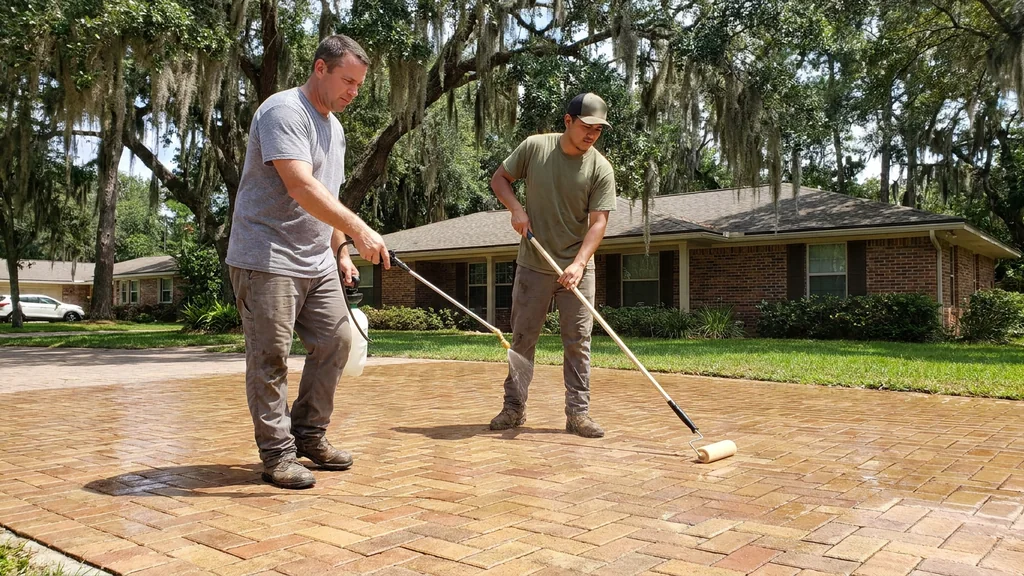
Most pros spray the sealer and then back-roll it so it covers evenly and settles into the joints. People can usually walk on it in a few hours, but cars should stay off for about a day. Pool decks with a glossy finish need an anti-slip additive. Ask what curing time fits your Saint Johns drive and the forecast. Later on, a quick water test tells you how the coat is holding up. If water beads, the sealer still works, and if it soaks in, a new coat is due.
Complete paver services in Saint Johns
A Saint Johns job runs in four stages: wash, re-sand, dry and seal. Haze, mildew and sprinkler stains come off first, then fresh sand fills each joint. The sealer goes on only after the surface is dry, so nothing gets trapped beneath it. To ask how long each stage takes at your home, call (904) 298-7976.
Driveways take daily tires and sprinkler spray along the edges. Front walks and entry pads often stay shaded by the house and grow mildew first. Pool decks and lanais need a finish that stays safe when wet. List each surface when you ask for a free quote, and you can get a price for each one.
Sealer comes in water-based or solvent-based types, with a matte or wet look. If the builder already sealed your pavers, that coat decides what can go on next. Changing the sheen later usually means stripping first, so the choice matters. Call (904) 298-7976 to talk about which finish suits your Saint Johns home.
Rain is the main scheduling issue, with about 118 wet days a year in St. Augustine. Flatwoods soil can also hold water near the surface for weeks at a time. Your assigned watering days have to fit around the sealing date too. For a date that works with all three, ask for a free quote.
Questions to ask before you hire
- How much do you need before the job, and how much after?
- How long should my sprinklers stay off after you seal?
- Will you try the sealer on a small spot first?
- Do you put in fresh joint sand before sealing?
- What do you do to keep sealer off my plants, pool and walls?
- Is the washing, sanding and any repair work part of the price you gave me?
- With our Florida sun and storms, how long does your sealer tend to last?
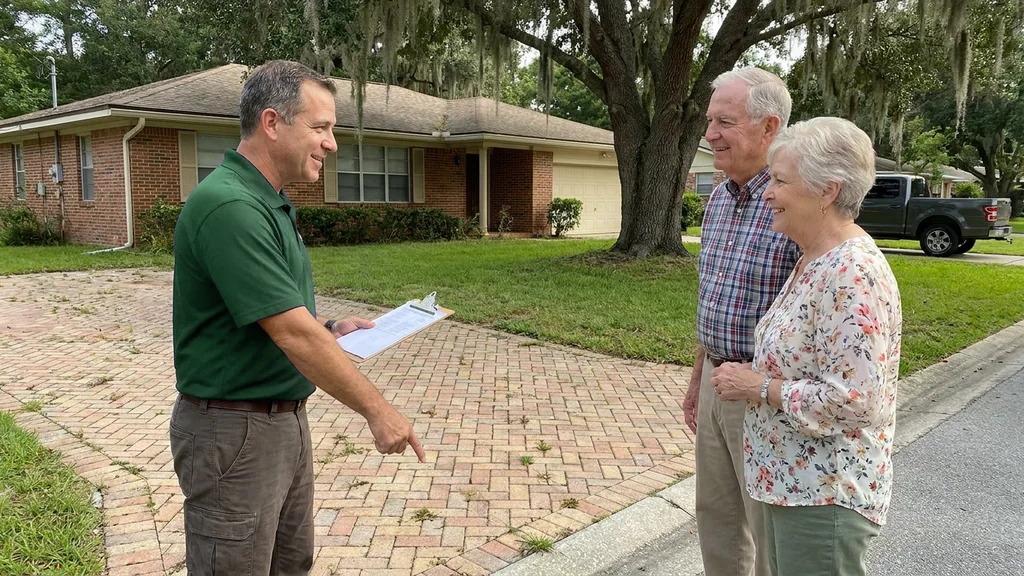
Why local matters in Saint Johns
A contractor who works in Saint Johns knows how new these communities are. That means asking when your pavers went in and whether the builder sealed them. Those two answers shape the whole job. For a contractor who already works these subdivisions, call (904) 298-7976.
Local knowledge also helps with water. St. Johns County sets watering rules, and some areas now have watering days assigned by address. A contractor used to those schedules plans the sealing date so sprinklers stay off the fresh coat. You can ask for a free quote and ask how they handle it.
Then there is the ground itself. Flatwoods soil drains slowly, and the creeks around Julington-Durbin Preserve add low, damp areas nearby. A contractor who knows the land checks for wet spots and waits for a dry window. If your yard stays soggy after rain, ask for a free quote with no obligation to book.
How did Saint Johns get its name, and does it matter for your project?
Saint Johns got its name in 2005, when a chamber poll picked it over Fruit Cove, River Oaks and Bartram. Before that, the post office listed the area under Jacksonville, and only 18,063 people lived here in 2000. By 2023 the estimate was 69,866, which is why so many pavers here are fairly new. To get a quote for yours, ask for a free quote.
Julington-Durbin Preserve protects about nine miles of creek shoreline, with sandhill on high ground and swamp along the water. Creekside and Bartram Trail high schools serve the area, and RiverTown has a riverfront on the St. Johns. Homes near the creeks and the river may sit on damper ground. Near any of these, call (904) 298-7976 and give your street.
Frequently Asked Questions
How much does it cost to seal pavers in Saint Johns?
Expect about $1.75 to $3.25 per square foot to clean, sand and seal, based on rates companies in Northeast Florida post. Builder sealer, haze and sprinkler stains decide where a Saint Johns home lands. Ask for the square footage in writing so bids line up. A pool deck or long walk adds area, so the total grows even if the rate stays the same.
Can a paver patio in Saint Johns be pressure washed?
Yes, washing is a normal part of the job. It pulls sand from the joints, so new sand has to go back before sealing. The contractor should also keep spray and runoff off beds, pool water and screen enclosures. Rust and mildew get treated during the same visit, before any sealer goes down.
What do professionals use to seal pavers in Saint Johns?
Most pros reach for a water-based or a solvent-based product, then pick a sheen from matte to wet look. If a builder already sealed your pavers, that product decides which type can follow. Write down the brand the contractor uses so the next Saint Johns coat can match it.
Is it better to spray or roll sealer on pavers in Saint Johns?
Most pros do both. One Jacksonville company says crews spray the sealer for even coverage and then back-roll it into the joints. That helps avoid puddles and thin spots on textured builder pavers. Rolling alone can leave lap marks, while spraying alone can put down too much.
How soon can new pavers in Saint Johns be sealed?
Wait about 30 to 60 days after install, one Jacksonville company advises. That gives the white haze called efflorescence time to work out. Sealing sooner can lock that haze under the coat. For pavers that went in years ago, the main question is what the builder put on them.
Do watering days affect paver sealing in Saint Johns?
Yes, because sprinklers must stay off the fresh coat. St. Johns County has watering rules, and some areas now have days assigned by address. Tell the contractor your watering days so the sealing date fits around them. Silver Landing in SilverLeaf was the first area to get address-based times.
Do pool decks in Saint Johns need a special sealer?
They need a finish that stays safe when wet. One Jacksonville company says a glossy sealer on a pool deck should include an anti-slip additive. The same company calls a matte, penetrating finish the safest pick near a pool. Ask which one the contractor suggests for your Saint Johns lanai and why.
How long do I stay off sealed pavers?
Walking is usually fine after a few hours, while cars should wait about a day. One Jacksonville sealing company gives those times and says the product and weather can change them. Keep sprinklers off for that stretch too, and ask the contractor to confirm the window for your Saint Johns drive.
Ready for a Free Estimate in Saint Johns?
Call (904) 298-7976 and tell us about your pavers.
Free, no obligations