
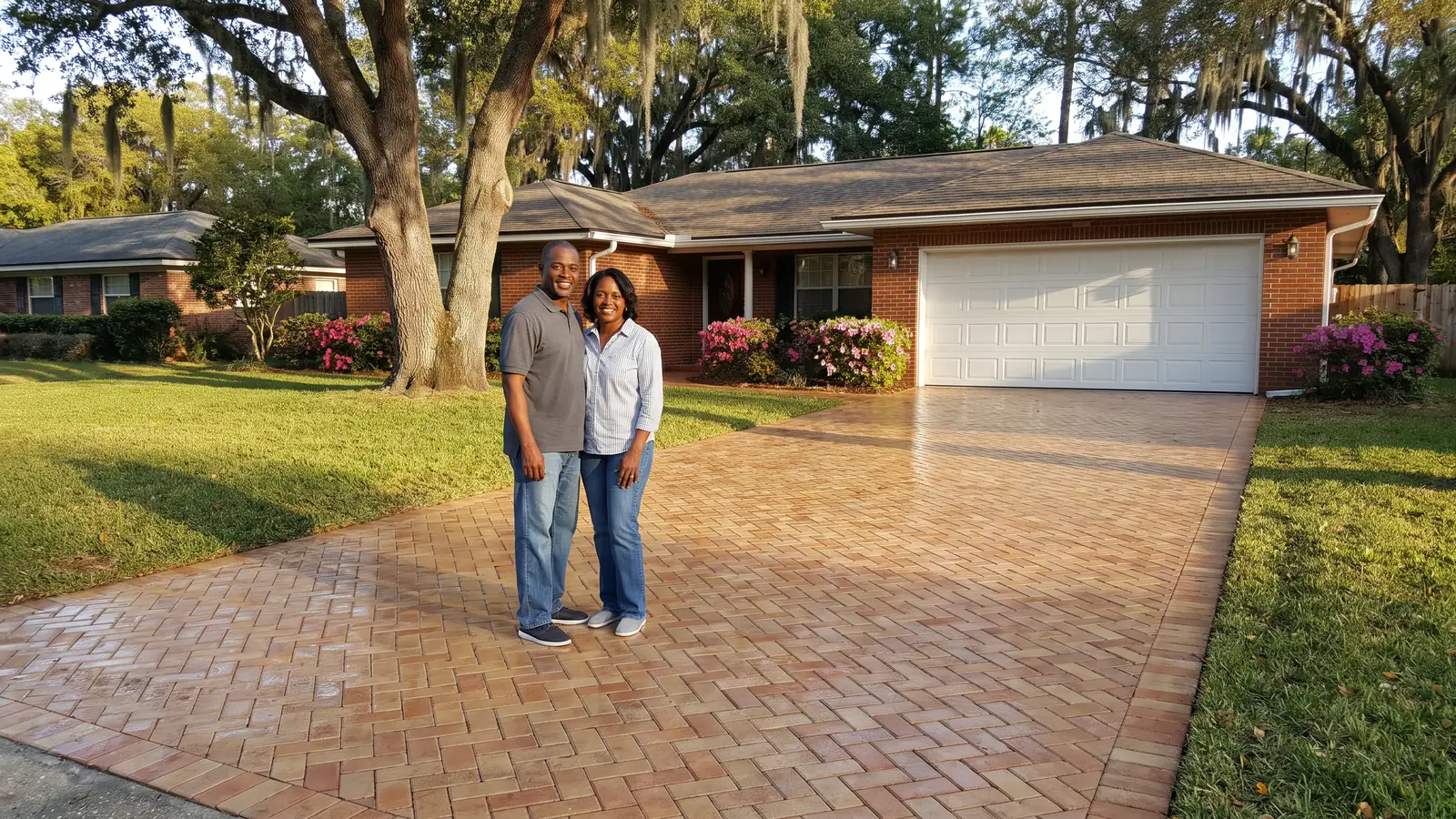
Paver sealing for San Jose homes
Paver Sealing in San Jose, FL
Pavers fading in San Jose? Get local help from Paver Sealing Orange Park. Call (904) 298-7976
- Brings out deeper paver color
- Fresh joint sand helps lock pavers in place
- Gives weeds less room to grow
- Makes the surface easier to keep clean
- Free estimate, no obligation
Request a Free Estimate
Free, no obligations.
Fast, careful paver sealing help in San Jose
Paver sealing in San Jose is easy to set up, from the river lots off San Jose Boulevard to the smaller streets near University Boulevard. A local contractor will clean, re-sand and seal your driveway, walkway or patio, and the estimate is free. Send a few details when you ask for a free quote, and a reply comes within 1 business day, usually much sooner.
Picture a front walk where oak shade has turned the pavers a dull green and weeds are pushing up through soft joints. After a careful wash, fresh sand and a new coat, that walk shows one clean color again from the street. Rather talk first? Call (904) 298-7976 and say which part of the walk bothers you most.
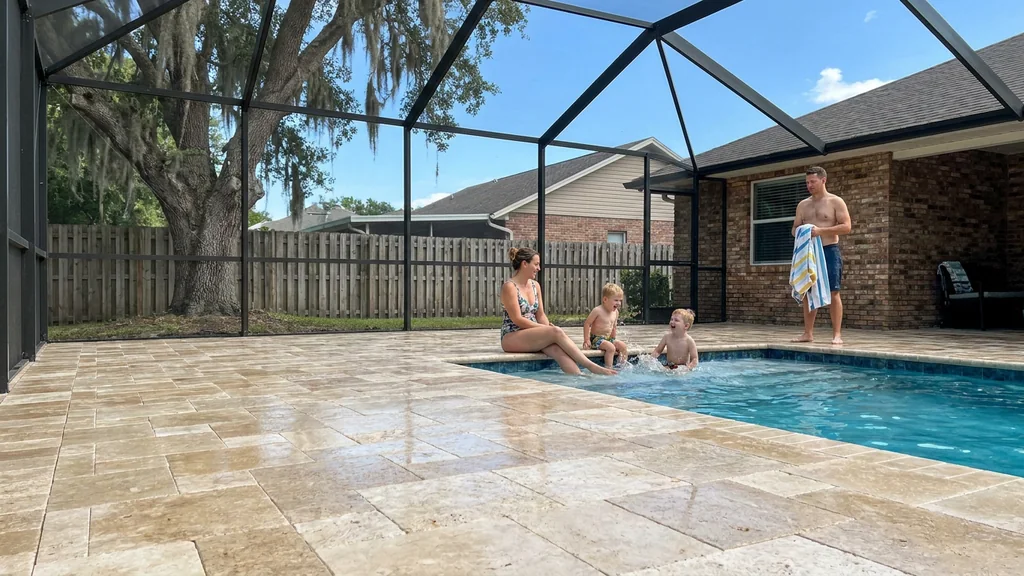
Why San Jose chooses Paver Sealing Orange Park
San Jose homeowners tend to want a contractor who knows the area, because a 1920s Mediterranean Revival house and a postwar ranch can share the same street. Mention the age of your home when you ask for a free quote, so the visit starts with the right questions.
A free look at your pavers
A contractor walks your San Jose driveway or patio in person and gives you a price. The estimate is free, with no obligation.
A price range to compare
Published Northeast Florida rates run $1.75 to $3.25 per square foot for a clean, sand and seal. Hold any San Jose bid up to it.
A finish that fits the house
Matte keeps a quiet look beside an older Spanish style front. A wet look adds depth but shows scuffs sooner.
You make every decision
You choose the date, the finish and whether to hire anyone at all. Nothing happens on your San Jose property without your yes.
Get Your Free Estimate in San Jose
Tell us about your pavers in San Jose.
Free, no obligations
What paver problems show up most in San Jose?
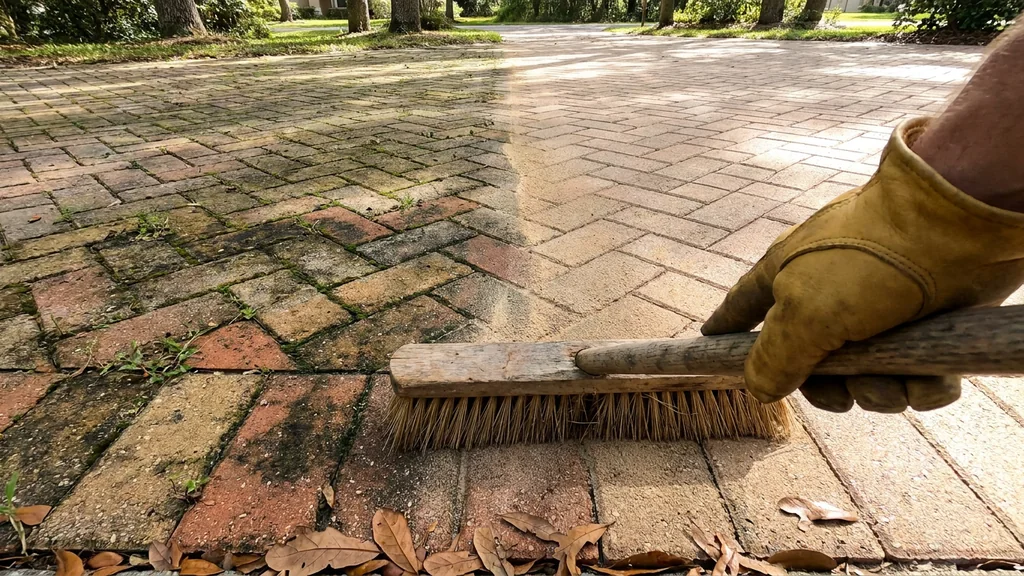
Green film under moss-draped oaks
Large oaks hung with moss shade most San Jose front yards, and that shade is where trouble starts. Moss and algae rarely grow on concrete pavers unless an area is heavily shaded. One Jacksonville paver company adds that shaded pavers hit by sprinklers grow black mildew fast. On a walk tucked under the branches, that means a slick green film that comes back every summer.
Roots lifting the driveway edge
Those same oaks send roots under driveways and walks. A Jacksonville sealing company warns that sealing locks in whatever is there, so a section lifted by roots stays lifted under a fresh coat. The fix comes first: the raised pavers get reset, and then the whole surface gets sealed together. Ask the contractor to check the edges nearest your trees. The apron near the street and the edges closest to trunks are the usual places to look.
Joint sand washed out by summer storms
Jacksonville gets around 52 inches of rain a year, mostly from May to September in short, heavy bursts. The ground across Duval County is largely deep, fast-draining sand, so loose joint sand has little to hold it. Once sand leaves a joint, the gap widens and soil drifts in. That is why weeds sprout in lines between San Jose pavers after a wet summer.
Old coats on older properties
Only 21 of the original 1920s San Jose Estates homes remain, and the lots around them have changed hands many times since. Pavers on these properties may carry a coat from an owner no one remembers. That matters, because a water-based sealer cannot go over a solvent-based one. A coat that is peeling, cloudy or patchy is a sign the contractor needs to identify it before choosing a product.
Rust streaks from well water
University of Florida extension notes that most Florida well water is high in iron. When a sprinkler system draws from a well, orange streaks often show up wherever the spray lands. On a San Jose driveway, those lines tend to follow the reach of each spray head. Sealing over them would trap the stain, so it needs treatment during the cleaning stage. Knowing which zones run off the well tells the contractor where to focus.
Does an older San Jose home change how pavers get sealed?
Yes, because San Jose mixes several eras on the same blocks. John Nolen planned the streets in 1925 and named them for cities in Spain, and 21 original Mediterranean Revival homes still stand. Postwar ranch houses and newer homes fill in around them. Tell the contractor what era your house comes from when you ask for a free quote.
Size changes the job too. Homes on the river side of San Jose tend to be large, while lots farther inland are smaller, with gated communities and planned developments mixed in. The Villages of San Jose, built in the 1980s, sits where the Beauclerc Country Club once stood. If you live in a planned community, call (904) 298-7976 and ask what your association should see before work starts.
Parts of San Jose were listed on the National Register of Historic Places in 1985. Separately, the City of Jacksonville requires a Certificate of Appropriateness for exterior work in local historic districts and on local landmarks, and it names driveways as an example. The city's Land Development Map shows whether your address carries local status. Check that map first, then ask for a free quote once you know what applies.
What does paver sealing cost in San Jose?
Companies around Northeast Florida commonly publish $1.75 to $3.25 per square foot to clean, sand and seal. In San Jose, shade growth, root-lifted edges and an unknown old coat are what push a job higher in that range. A clean, sunny driveway with full joints usually lands lower. To see where your pavers fall, ask for a free quote, and the estimate is free.
Layout matters as much as condition. A long drive on a river lot covers more ground, while a small courtyard behind an older house can mean carrying gear in by hand. Walkways, patios and pool decks are measured along with the driveway. Call (904) 298-7976 and a contractor can explain which of these apply to your home.
| Paved area | Typical example | Clean, sand and seal |
|---|---|---|
| 300 sq ft | Small patio or walkway | $525 to $975 |
| 600 sq ft | Two car driveway | $1,050 to $1,950 |
| 1,000 sq ft | Large driveway or pool deck | $1,750 to $3,250 |
| 1,500 sq ft | Driveway plus pool deck | $2,625 to $4,875 |
Math based on the $1.75 to $3.25 per square foot that Northeast Florida paver companies published as of November 2026. Your contractor sets the actual price after seeing the surface. Repairs, leveling and stripping failed sealer are usually extra.
How does a paver sealing job work in San Jose?
Walk the lot and find the trouble spots
The visit starts with a look at where shade sits, where roots push up and where water runs off. Lifted or sunken pavers get flagged for repair, since sealing would keep them that way. The contractor also checks for an old coat, because the wrong pairing of products can fail. On an older San Jose property, any records you have about past work help. Expect questions about when the pavers went in and who sealed them last.
Wash away growth, tannins and rust
Cleaning comes next, aimed at green film under the oaks and brown leaf tannin stains. Rust lines from a well-fed sprinkler get treated at this stage too. Rinse water should be kept off older stucco and wood trim where the pavers meet the house. The goal is a surface with nothing left to trap. Deep stains that will not fully lift get pointed out before the sealer goes on.
Refill every joint with sand
Washing pulls sand out of the joints, so it gets replaced before any sealer goes down. Fresh sand is swept in until the joints are full and the surface is clear. On San Jose driveways where weeds have taken hold, this step often takes the longest. Full joints help keep soil and seeds out later. Low spots often show up here, once the old sand is gone.
Let the pavers dry all the way
Sealer needs a dry surface, and shaded San Jose pavers can stay damp long after sunny ones dry. Summer storms from May to September can also push a sealing day back. One Jacksonville company says most sealer that turns white traces back to damp pavers or too heavy a coat. A patient contractor waits rather than rushing.
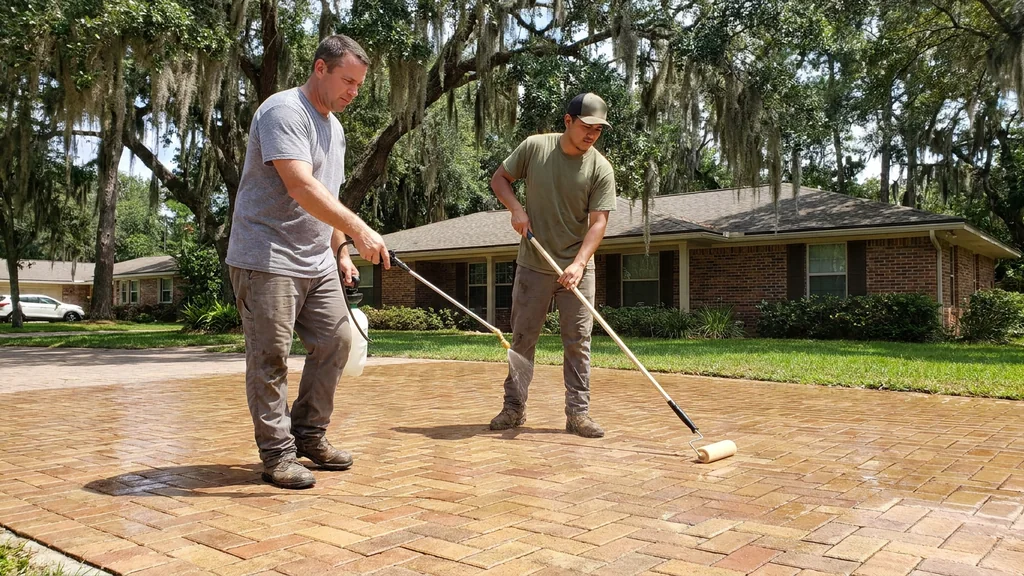
Seal in the finish you chose
Pros typically spray the sealer on and back-roll it, which spreads it evenly and works it into the joints. You pick matte or wet look, keeping in mind that wet look shows scuffs sooner. Most people can walk on it within a few hours, while tires should wait about a day. The contractor will give you a time for your weather.
Complete paver services in San Jose
A San Jose job follows four stages in a set order: repair, wash, re-sand and seal. Lifted pavers come first so the coat does not lock in a bump. The wash clears oak grime and stains, fresh sand fills the joints, and the sealer goes on last. To ask how long each stage might take on your lot, call (904) 298-7976.
Driveways off San Jose Boulevard take daily tires and collect leaves from the street trees. Front walks under the oaks tend to go green first, while open patios fade in the sun. Pool decks stay wet longer than anything else on the lot. List every surface you want done when you ask for a free quote, from the front drive to the pool deck.
Sealer choice starts with what is already on the pavers, since a water-based coat cannot follow a solvent-based one. After that, it comes down to matte or wet look. Many owners of older Spanish style homes lean toward matte so the pavers do not compete with the house. Call (904) 298-7976 to talk through which finish suits your San Jose home.
Timing in San Jose depends on rain and shade. Summer brings most of the year's rain in short, hard storms, while November through April is drier. A shaded walk may need more drying time than a sunny drive, even on the same day. For a sealing date that fits your yard, ask for a free quote.
Questions to ask before you hire
- How do you fix a finish that dries cloudy or blotchy?
- Will you email me your insurance certificate and tell me which license this job needs?
- Is the washing, sanding and any repair work part of the price you gave me?
- What do you do to keep sealer off my plants, pool and walls?
- Will you try the sealer on a small spot first?
- With our Florida sun and storms, how long does your sealer tend to last?
- How long should my sprinklers stay off after you seal?
Why local matters in San Jose
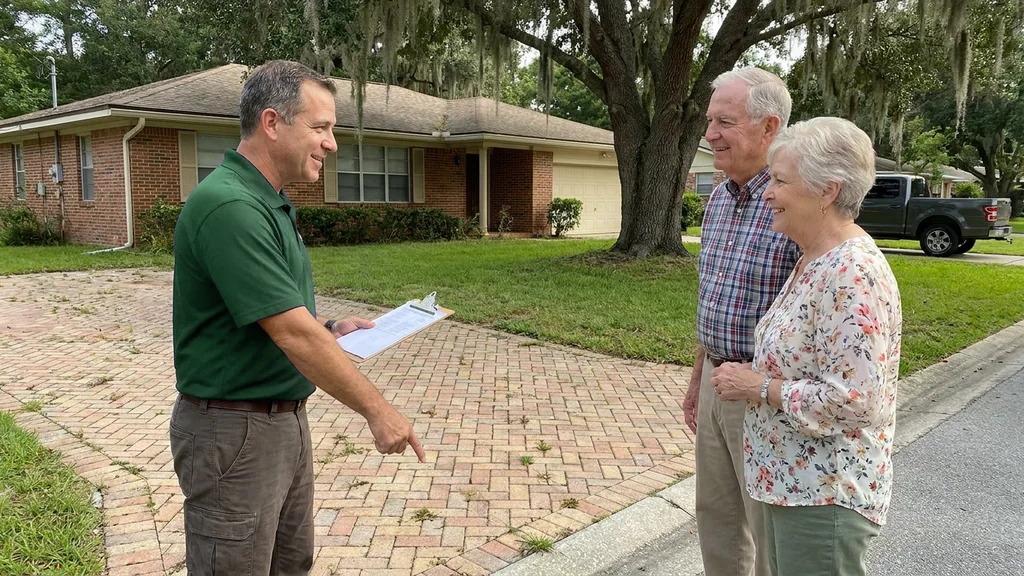
A contractor who knows San Jose will look up before looking down, because the oaks overhead decide where growth and roots show up. That shapes how long the wash takes and whether any pavers need resetting. Someone from far away may price only the square footage. Call (904) 298-7976 to reach someone who works the river side of the Southside.
Local knowledge also helps with older homes. With 1920s Mediterranean Revival houses next to postwar ranches, a contractor here knows to ask about past coats and to protect older walls from rinse water. They also know to raise the city's historic rules when a property may fall under them. You can ask for a free quote and ask how that would be handled at your address.
Weather is the third piece. Summer rain in Jacksonville arrives in brief, intense bursts, and a shaded San Jose patio may hold moisture well into the next day. A contractor who works the area plans around that instead of sealing damp pavers. If your yard is heavily shaded, ask for a free quote and mention it, with no obligation to hire.
Why do so many San Jose streets have Spanish names?
They come from John Nolen's 1925 plan, which named the streets for cities in Spain and set them in a radial pattern. Part of that pattern still circles DuPont Junior High School. Nolen also called for paved sidewalks on every street, which was rare in suburban Florida at the time. If your pavers sit along one of those curving streets, call (904) 298-7976.
Other pieces of the plan are easy to spot. The old San Jose Hotel became The Bolles School, and San Jose Episcopal Church meets in the original administration building. Donald Ross laid out the course at San Jose Country Club, and one entrance gate still stands on San Jose Boulevard. If you live within sight of the old hotel or the club, ask for a free quote and mention your nearest cross street.
Frequently Asked Questions
How much does it cost to get pavers sealed in San Jose?
Expect $1.75 to $3.25 per square foot to clean, sand and seal, the range Northeast Florida companies commonly publish. Heavy shade growth, root repairs or an old coat that needs attention can move a San Jose job toward the top. Ask for the total square footage on the quote so you can compare bids fairly. A small walkway can cost more per foot than a big drive, since setup time stays about the same.
Are patio pavers in San Jose supposed to be sealed?
They are not required to be, but concrete pavers here usually last better with a coat. A Jacksonville paver company says local sun fades bare pavers, summer downpours flush out joint sand, and shaded spots grow mildew fast. Sealing slows all three on a San Jose patio. Dense natural stone such as travertine is the main exception that same company names.
Can a San Jose paver patio be pressure washed?
Yes, as long as the joint sand gets replaced afterward. Washing pulls sand out of the joints, and a paver trade article notes that refilling them after power washing is often recommended. A contractor sizes the pressure to the paver so the surface is cleaned without being scarred. Ask how plant beds and older walls will be shielded from the spray.
What common mistakes in laying pavers show up at sealing time?
The usual ones are a weak base, missing edge restraints and poor slope, according to a paver maker. A weak base lets pavers sink, and missing edges let them drift apart. Sealing will not fix either, so a San Jose contractor should point them out before quoting the coat. Point out any low spots or gaps during the visit so the plan covers them.
Do I need city approval to seal pavers on a historic San Jose property?
It depends on whether your address is in a local historic district or is a local landmark. Jacksonville requires a Certificate of Appropriateness for exterior work there and lists driveways as an example. The city page does not name sealing, so check the Land Development Map and ask city staff. Getting that answer first can save you from redoing work.
How soon can I park on newly sealed pavers?
Give the sealer about a day before any car rolls onto it. One Jacksonville sealing company says foot traffic is usually fine within a few hours. The exact time depends on the sealer and the weather, so ask the contractor before you plan your San Jose driveway around it. Many owners park on the street or in the garage overnight.
How can I tell when the sealer on my pavers has worn off?
Sprinkle some water on the pavers and watch. If it beads up, the coat is still working, and if it soaks in and darkens the surface, the coat is spent. Companies commonly quote two to five years between coats, so a quick check now and then is worth it.
Should brand-new pavers at my San Jose home be sealed right away?
No, new pavers should usually wait a while. One Northeast Florida company suggests about 60 to 90 days, so trapped moisture can escape and any white haze can rise and be treated. Sealing too soon can lock that haze under the coat.
Ready for a Free Estimate in San Jose?
Call (904) 298-7976 and tell us about your pavers.
Free, no obligations