
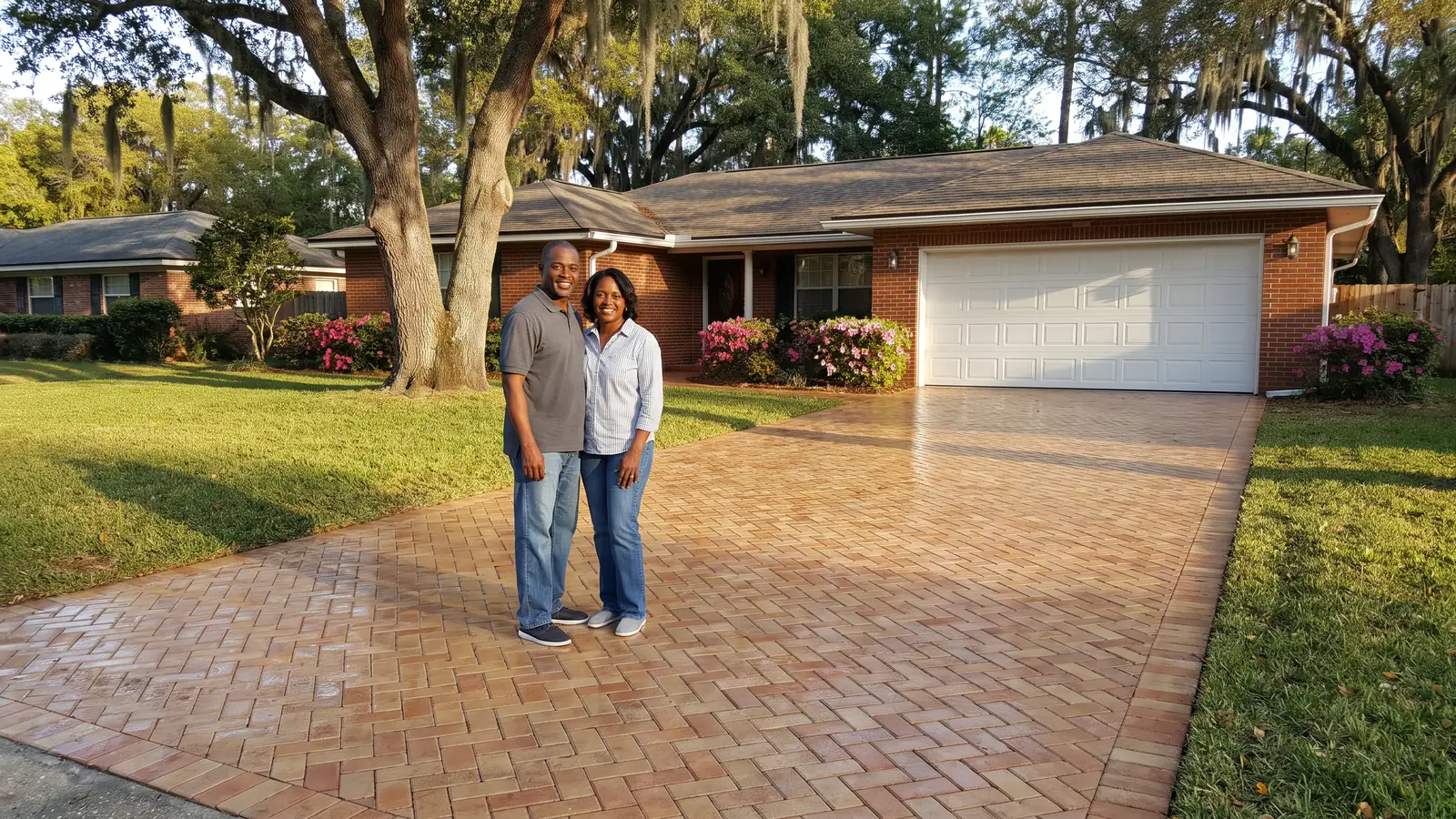
Paver sealing for San Marco homes
Paver Sealing in San Marco, FL
If your San Marco patio is old brick or newer pavers, call (904) 298-7976 to have it cleaned and sealed.
- Brings out deeper paver color
- Fresh joint sand helps lock pavers in place
- Gives weeds less room to grow
- Makes the surface easier to keep clean
- Free estimate, no obligation
Request a Free Estimate
Free, no obligations.
Fast, careful paver sealing help in San Marco
Paver sealing is available in San Marco for driveways, front walks and back patios, from the river homes on River Road to the blocks around the Square. A local contractor cleans the pavers, puts new sand in the joints and applies the sealer, and the estimate is free. Send a note when you ask for a free quote, and a reply comes within 1 business day, usually much sooner.
Think of a patio that once matched the warm brick of the house but now looks faded, with green creeping in from the shady corner. After the work, the color deepens again and water beads on top instead of soaking in. The joints sit tight and clean. To talk it over before booking anything, call (904) 298-7976.
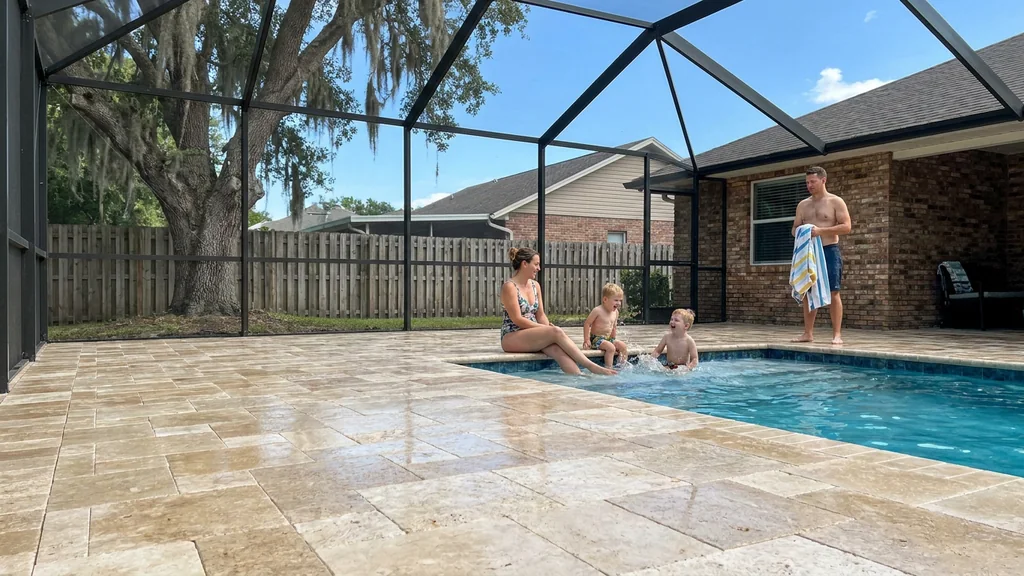
Why San Marco chooses Paver Sealing Orange Park
San Marco owners tend to hire a nearby paver contractor because street flooding, old oaks and nearly a century of homes all change the work. To find out what that means at your address, ask for a free quote.
A free look at your pavers
The contractor visits your San Marco home, measures the area and prices the job. You owe nothing for the visit and can say no.
Know the going rate
Companies across Northeast Florida post rates of $1.75 to $3.25 a square foot to clean, sand and seal. Compare your quote to it.
Finish matched to the street
A low-shine matte suits a 1920s Mediterranean front. A glossy wet look stands out more but shows tire scuffs sooner.
The decisions stay with you
You choose the date, the sheen and whether to hire at all. A San Marco estimate is free and carries no obligation.
Get Your Free Estimate in San Marco
Tell us about your pavers in San Marco.
Free, no obligations
What paver problems show up most in San Marco?
Street water that lingers
San Marco has dealt with flooding for generations, and in July 2024 water reached front doors on some streets. One resident near Riviera Street and Belmonte Avenue said water once sat on the road for four or five days. Pavers that stay wet that long collect grit and lose joint sand. The city says its LaSalle Street pump station will help but will not stop every flood, so the cleaning stage has to plan for that. Grit that settles into the joints also makes room for weeds once the water drains away.
River Road high-water marks
After Irma in 2017, one River Road home showed a high-water mark of about 5 feet, higher than Matthew a year earlier. River water leaves a film in the pores of a paver and down in the joints. If a coat goes on over that film, it stays there for years. Homes near the water along River Road and the riverfront parks need the most careful wash. The same couple's car flooded to the steering wheel, a reminder of how high the river climbed that week.
Shade from oaks and magnolias
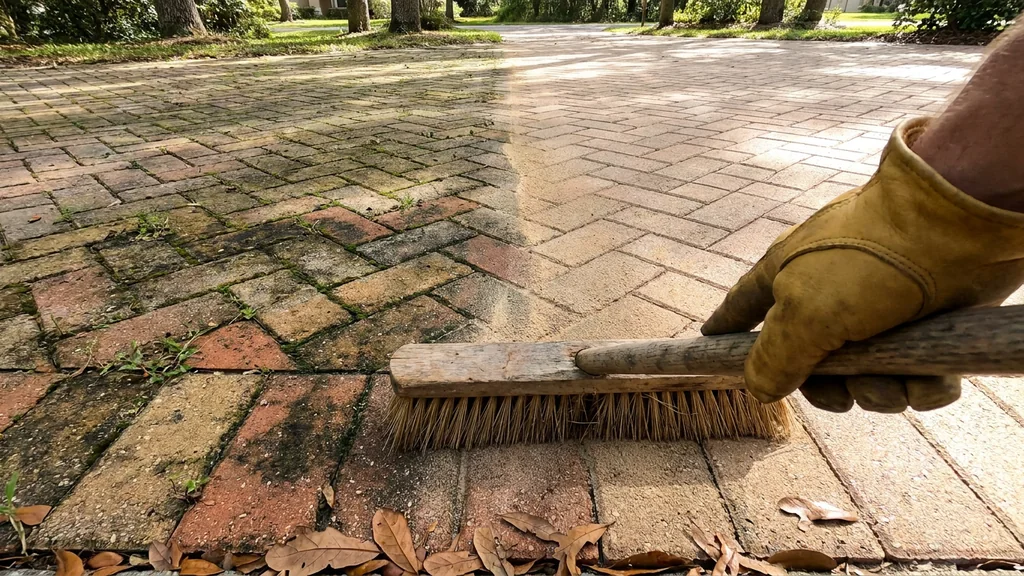
San Marco's parks show how much canopy the area holds, from the 19 live oaks on the River Road median to the big magnolias in Landon Park. Moss and algae grow on pavers mostly where shade is heavy and the surface stays damp. A shaded San Marco courtyard can turn green in the corners well before the sunny drive does. Cleaning that growth out is the first job before any sealer. Leaves and blossoms that sit on damp pavers add stains of their own, and those come out at the same time.
Joint sand washed out by downpours
Jacksonville averages about 52 inches of rain a year, much of it in short, hard summer storms. Add street flooding, and joint sand in San Marco takes a beating. Once a joint loses sand it widens, soil settles in and weeds take root. The fix is fresh sand, swept in and then held in place by the sealer. San Marco walks that have gone a few years without new sand often show weeds along every edge, which is the clearest sign.
Brick, stone and mystery coats
Brick and natural stone soak up more than concrete pavers and need a different sealer chemistry, one Jacksonville company says. On older San Marco lots, a past owner may also have sealed the surface with an unknown product. A water-based coat will not stick over a solvent-based one, so the old layer decides what comes next. Cloudy or white patches usually mean a coat went on too thick or over damp pavers. Sorting this out at the first visit keeps a new coat from failing early.
How do San Marco's different sections change a paver job?
Each section brings its own mix of lot size, shade and water. The original 1925 San Marco was laid out in the City Beautiful style, with winding streets, planted medians and larger lots. Larger lots often mean longer drives, wider patios and more square feet to measure. Tell the contractor which part of the neighborhood you live in when you ask for a free quote.
Villa Alexandria was platted in 1929, and the First Addition sold lots into the 1940s. Fletcher Park, near Atlantic Boulevard, holds homes from a 1919 housing project built for shipyard workers. Older and newer houses sit side by side, so the materials next to the pavers vary from street to street. Call (904) 298-7976 and describe the house and the paved areas around it.
Colonial Manor and South Riverside are named subneighborhoods, and River Oaks grew up after the Acosta Bridge opened in 1921. River Oaks Park follows Craig Creek through a flood plain with natural wetlands, so nearby yards may stay damp longer. That affects drying time before sealing. Mention any creek or river nearby when you ask for a free quote.
What does paver sealing cost in San Marco?
Published rates in Northeast Florida commonly run $1.75 to $3.25 per square foot to clean, sand and seal. In San Marco, shade growth, flood grit, missing sand and any old coat move a job up or down in that span. Brick and stone can cost more than concrete pavers because they need a different sealer. For a free figure on your property, ask for a free quote.
Size and access matter too. A small patio often costs more per foot than a long drive, because setup time does not shrink with the job. A tight side yard or a locked gate behind a 1920s house adds prep time as well. Call (904) 298-7976 and the contractor can walk through each item before you decide.
| Paved area | Typical example | Clean, sand and seal |
|---|---|---|
| 300 sq ft | Small patio or walkway | $525 to $975 |
| 600 sq ft | Two car driveway | $1,050 to $1,950 |
| 1,000 sq ft | Large driveway or pool deck | $1,750 to $3,250 |
| 1,500 sq ft | Driveway plus pool deck | $2,625 to $4,875 |
Math based on the $1.75 to $3.25 per square foot that Northeast Florida paver companies published as of November 2026. Your contractor sets the actual price after seeing the surface. Repairs, leveling and stripping failed sealer are usually extra.
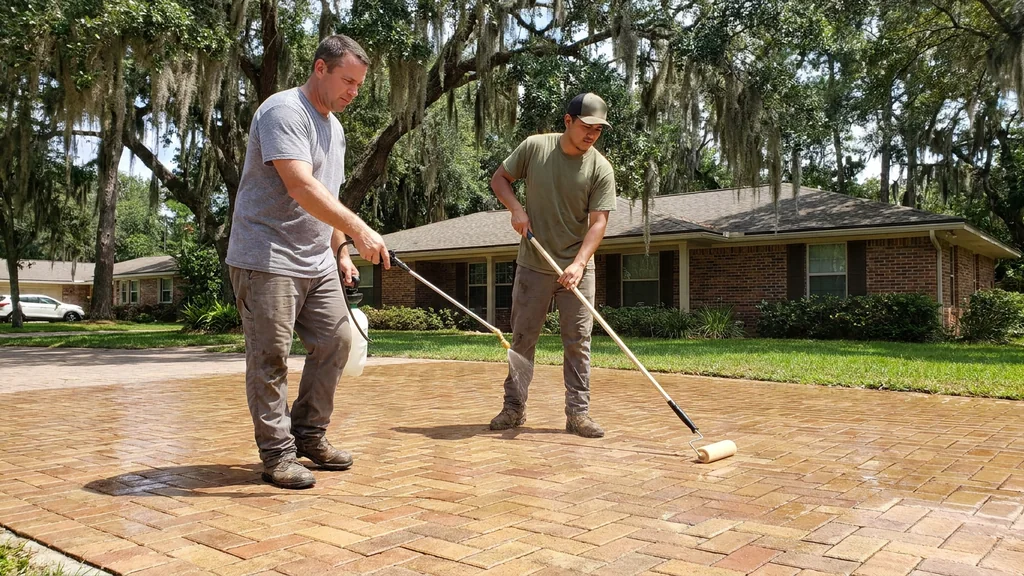
How does a paver sealing job work in San Marco?
Walk the property
The contractor starts by looking at how your San Marco pavers drain, where the oaks keep them shaded and whether street water reaches them. Sunken or lifted pavers get reset before sealing, since a coat only preserves a dip. Any old sealer gets identified at this stage too. Mention past floods on your street so the plan includes extra cleaning. You will also get a measured price for each surface, with no obligation to book.
Clean the surface and the joints
The wash clears green growth, grit and stains from the face of each paver and from the joints. Brick, stone and painted trim next to the pavers get protected from cleaners and overspray. Low spots that collect flood water often need a second pass. This is the stage where most of the visible change happens. Rinse water is steered toward drains and away from beds and the foundation.
Add new joint sand
Washing pulls sand from the joints, so new sand gets swept back in. Full joints help keep weeds and ants out and hold the pavers steady. On San Marco patios that have flooded more than once, this step can take longer than the wash. The surface is then swept clean so no loose sand sits under the coat.
Wait for a dry day
Pavers must be dry all the way through before the coat, and summer storms from May to September make that a moving target. A San Marco courtyard under magnolias or live oaks can stay damp long after a sunny drive dries out. Streets that hold water after storms may need an extra day. A patient contractor waits instead of sealing damp pavers, which is a common cause of a cloudy finish.
Apply and cure the sealer
The sealer usually goes on with a sprayer and then gets back-rolled for even coverage and good joint fill. People can usually walk on it within a few hours, and cars should wait about a day. Ask how the shade at your San Marco home changes that. Later, if water soaks in and darkens the pavers instead of beading, the coat is worn. That simple check tells you when the next round is due.
Complete paver services in San Marco
Every San Marco job runs in the same order: clean, re-sand, dry and seal. Grit from street flooding and green growth from the shade come off first. New sand fills the joints, and the sealer goes on last so nothing dirty gets locked underneath. To hear how long each step takes on a lot your size, call (904) 298-7976.
Front drives near the Square see daily tires and any water that pools in the street. Back patios under oaks and magnolias stay shaded and grow moss first. Pool decks and side walks often sit in tight spaces between older homes, where gear has to be carried in by hand. Name each surface you want sealed when you ask for a free quote, and the contractor can price them one by one.
Two choices shape the sealer: water-based or solvent-based, and matte or wet look. The old coat on your pavers may rule one of them out. One Jacksonville company says most of its clients pick a semi-gloss middle ground. Call (904) 298-7976 to talk over which sheen suits your San Marco house.
Because most rain lands from May to September, a summer date in San Marco can slip after a storm. Flooded streets may need extra time to drain and dry before sealing. Late fall through spring is usually easier to schedule. For a date that suits your block, ask for a free quote.
Questions to ask before you hire
- With our Florida sun and storms, how long does your sealer tend to last?
- Will you email me your insurance certificate and tell me which license this job needs?
- How much do you need before the job, and how much after?
- How long until I can drive or walk on the pavers again?
- What do you do to keep sealer off my plants, pool and walls?
- If I have a concern after you finish, who do I call?
- Will my pavers look glossy or natural once the sealer dries?
Why local matters in San Marco
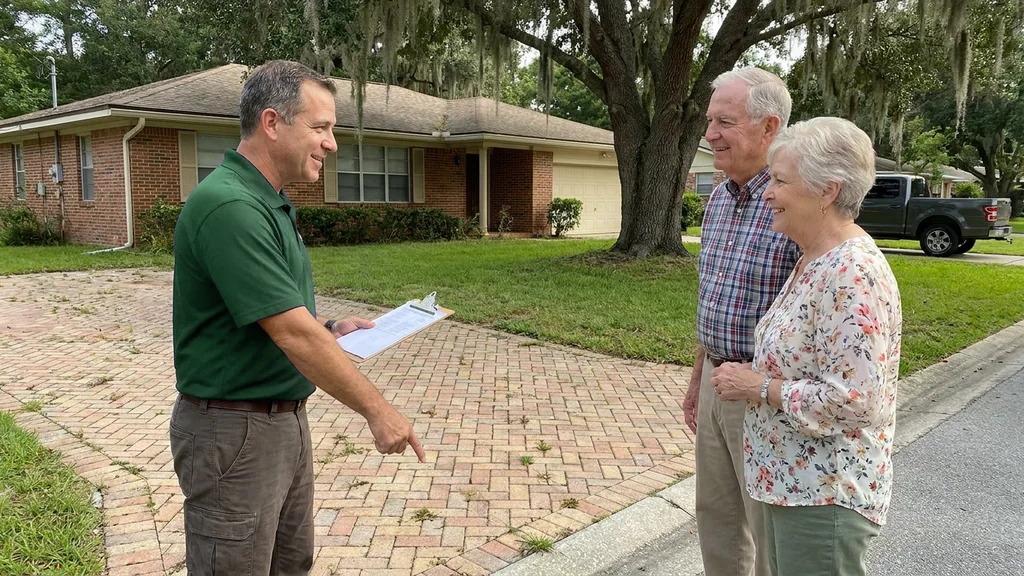
A contractor who works San Marco knows which streets hold water after a storm, from LaSalle Street to the blocks off Hendricks Avenue. That knowledge shapes the cleaning plan and the sealing date. A crew from far away may treat a flood-prone patio like any other. To reach someone who knows the area, call (904) 298-7976.
Local experience also helps with older materials. San Marco has nearly a century of homes, from 1919 cottages in Fletcher Park to houses built as lots sold into the 1940s. A contractor used to that range knows to protect old brick, stucco and trim. You can ask for a free quote and ask how they handle homes like yours.
Shade is the third piece. Oaks and magnolias cover much of the neighborhood, and shaded pavers grow moss and dry slowly. Someone who knows the canopy plans the cleaning and timing around it. If your patio sits under big trees, ask for a free quote with no obligation to go ahead.
Is it worth hiring someone who knows San Marco's landmarks?
Yes, because the streets around each San Marco landmark come with their own conditions. San Marco Square, where Atlantic Boulevard meets Hendricks Avenue and San Marco Boulevard, holds the 1938 San Marco Theatre and the fountain with three lions. Balis Park sits in the middle and was expanded in 2013. If you live near the Square, call (904) 298-7976.
Marco Lake began as the clay pit of a brickyard that made 50,000 bricks a day by 1923. Developer Telfair Stockton added a seawall and dug a canal to the river. Not far away, the Red Bank Plantation House has stood since 1857. Homes near either one may sit close to water, so ask for a free quote and name your street.
Frequently Asked Questions
Are patio pavers in San Marco supposed to be sealed?
Sealing is not required, but it helps a San Marco patio hold its sand and color. A sealed joint resists the washout that comes with heavy rain and street flooding. Sealing also makes it harder for weeds to root in the joints. For shaded patios near the river, it means less scrubbing between cleanings.
How much does it cost to seal pavers in San Marco?
Plan on $1.75 to $3.25 per square foot to clean, sand and seal, the span posted by companies in Northeast Florida. Shade growth, flood grit, old sealer and paver type decide where a San Marco job falls. A written square footage on each quote makes the bids easy to line up side by side.
Why is paver sealing so expensive in San Marco?
The price covers much more than the sealer itself. Cleaning, new joint sand, drying time and the coat itself all take labor, and small patios cost more per foot because setup does not shrink. Brick, stone and tight side yards behind older San Marco homes can add to the total.
How often do you need to reseal pavers in San Marco?
Expect to recoat somewhere between two and five years out, the window area companies tend to give. Heavy shade and street flooding can push a San Marco patio toward the short end of that span. A quick test helps: if water beads, the coat still works, and if it soaks in, it is time.
Can my pavers be sealed soon after street flooding?
Yes, as soon as the surface is clean and dry all the way through. Flood water leaves grit and pulls sand from the joints, so the wash and re-sanding come first. The contractor should also check for low spots that settled while the water sat. Those get reset before sealing, because a coat would only hold the dip in place.
Can new sealer go over the old coat on my San Marco pavers?
Only if the two products work together. A water-based sealer will not stick over a solvent-based one, so the old coat has to be identified first. Keep any product names or receipts from past work, since they settle the question fast. If no record exists, the contractor can test a small area first. That small step can save a whole patio from a coat that peels or clouds.
Should brick pavers in San Marco be sealed?
They can be, with a sealer made for brick. One Jacksonville company says brick and natural stone are more porous than concrete pavers and need a different sealer chemistry. Ask the contractor to name the product and explain why it suits a San Marco brick patio.
How long should I keep cars off sealed pavers?
Plan on about a day before driving on them, and a few hours before walking. One Jacksonville sealing company gives those times and says the product and weather change them. A shaded San Marco drive may need a little longer. Keep sprinklers off the fresh coat for the same stretch, and ask the contractor to confirm the exact window.
Ready for a Free Estimate in San Marco?
Call (904) 298-7976 and tell us about your pavers.
Free, no obligations