
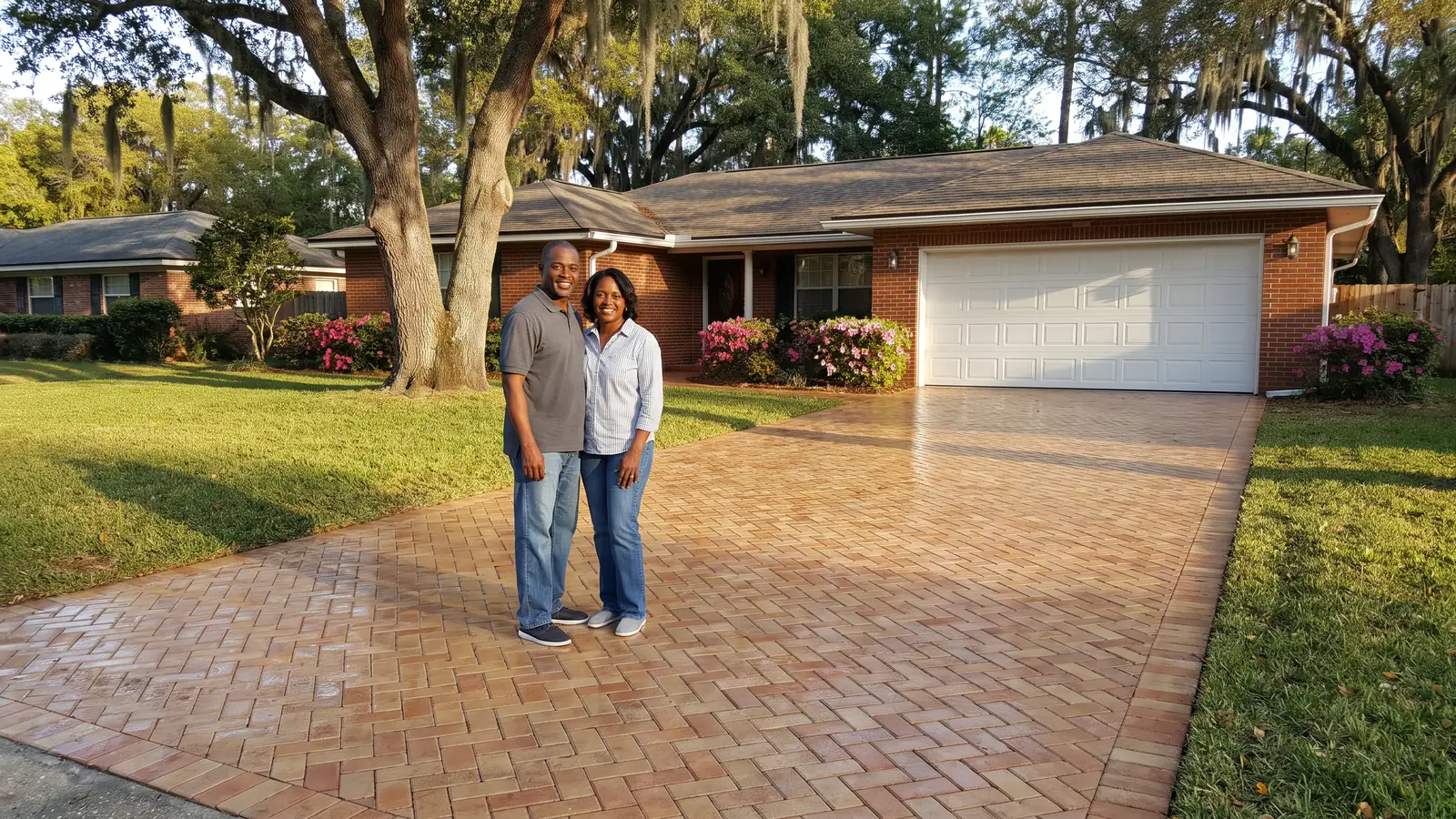
Paver sealing for Cedar Hills homes
Paver Sealing in Cedar Hills, FL
Cedar Hills ranch homes have stood since the 1950s; call (904) 298-7976 to give the pavers out front a fresh seal.
- Brings out deeper paver color
- Fresh joint sand helps lock pavers in place
- Gives weeds less room to grow
- Makes the surface easier to keep clean
- Free estimate, no obligation
Request a Free Estimate
Free, no obligations.
Fast, careful paver sealing help in Cedar Hills
Paver sealing is open to every Cedar Hills home, from the ranch houses off Harlow Boulevard to the larger lots along the Cedar River. A local contractor cleans, re-sands and seals your patio, walkway or driveway after a free estimate. Ask for yours, and a reply arrives within 1 business day, usually much sooner. Start by tapping ask for a free quote.
Think of the paver patio outside your sliding glass door, faded and speckled with weeds after years of Florida sun. Once it has been washed, filled with sand and sealed, the color comes back and rain rolls right off. The free visit also helps you decide whether the front walk should be done at the same time. You can also call (904) 298-7976 and describe the spot you want sealed.
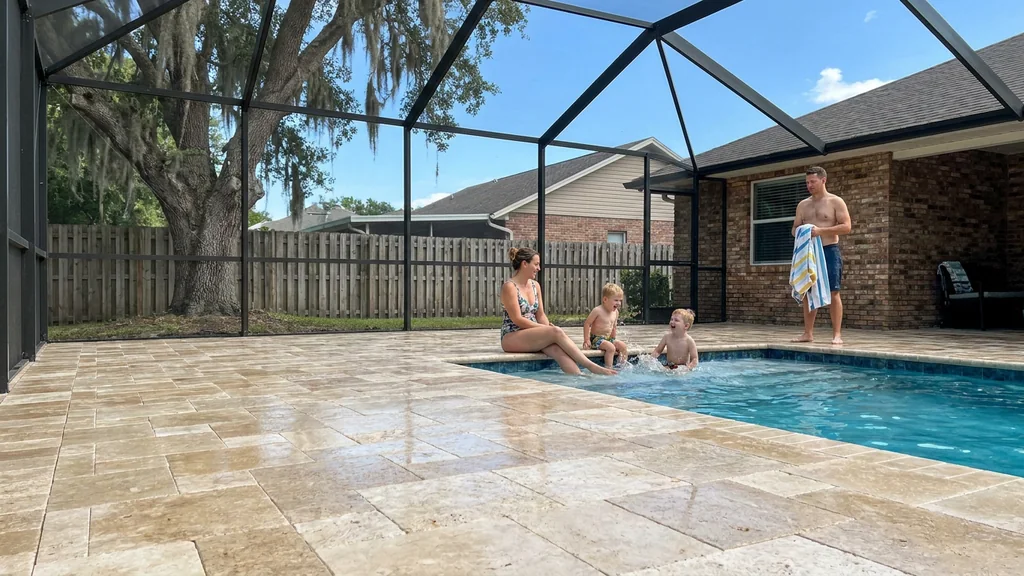
Why Cedar Hills chooses Paver Sealing Orange Park
Cedar Hills is a neighborhood of 1950s block and brick ranch homes, and most of its pavers were likely added long after the houses went up. A contractor who knows these streets plans for that mix of old and new, so ask for a free quote to get started.
Free look at the patio
A Cedar Hills estimate costs nothing. The contractor measures, explains the plan and leaves the choice with you.
The published going rate
Around Northeast Florida, posted prices run $1.75 to $3.25 per square foot. Hold your Cedar Hills quote up to that.
A finish for a ranch house
Matte stays low key beside red brick. A wet look makes paver color richer, but scuffs show up faster.
No pressure to sign
You set the timing and can pass on the work. Nothing is booked at your Cedar Hills home until you say so.
Get Your Free Estimate in Cedar Hills
Tell us about your pavers in Cedar Hills.
Free, no obligations
What paver problems show up most in Cedar Hills?
Patios right outside the sliding door
Cedar Hills ranch homes were built with sliding glass doors that open onto a back patio. Pavers in that spot see daily feet, grills and patio chairs, and they sit inches from the house. That means rinse water has to be aimed away from the door track and screens. It also means the patio is often the first surface owners want sealed, since it is the one they look at most. Grease from a grill can also soak in and needs its own treatment before any coat.
Runoff toward the ditches
A 1959 aerial of Cedar Hills Estates shows streets laid out around drainage ditches and canals. Jacksonville gets about 52 inches of rain a year, much of it in short summer storms. One Jacksonville paver company says those downpours flush sand out of joints that are not sealed. On a Cedar Hills driveway that slopes toward the street, the lower edge usually loses sand first, and loose pavers follow. Each storm pulls a little more, so the gap grows year after year until the edge starts to rock.
Weeds and ants in wide joints
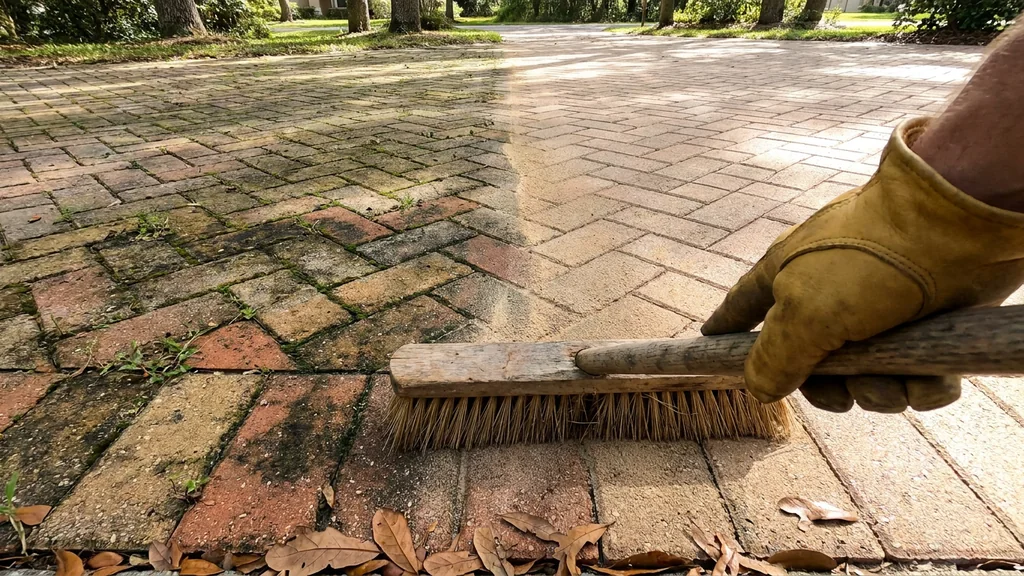
A paver industry article notes that weeds often grow where joints have widened and soil has settled in. The same article says sealing helps discourage ants and weeds in those joints. Older paver layouts beside 1950s Cedar Hills homes have had years to lose sand. Pulling weeds by hand only treats the top, which means the joints need refilling before any coat. Ant mounds that keep popping up in the same joint are a sign the sand there is thin.
A white bloom on the surface
Some pavers grow a chalky white film called efflorescence. An industry article says it is temporary and fades with weathering, yet nobody wants to seal it in. A Jacksonville paver company says stains and efflorescence get treated before its cleaning starts. If your Cedar Hills patio looks dusty even after rain, mention it at the estimate. Sealing over it would hold the haze in place, so it has to be handled first. Brick-red pavers tend to show the white film most clearly.
Two ages of pavers on one lot
Many homes along the Cedar River have been expanded or replaced with much larger houses. A remodel can leave fresh pavers beside an older section that may already carry a coat. Water-based sealer cannot go over solvent-based sealer, so the old product matters. The contractor has to sort out each section before picking one sealer for the whole Cedar Hills lot. A patchy look where the two sections meet is often the first clue.
Do the different parts of Cedar Hills need different paver care?
Yes, a little, because Cedar Hills grew as seven small neighborhoods around the Cedar Hills Shopping Center. Most homes are modest single-story ranch houses of brick or concrete block from the 1940s and 1950s. Their paver areas tend to be a back patio, a walk to the front door and sometimes a driveway or a side path. When you ask for a free quote, say which of these you want done.
The storybook streets, such as Mother Goose Road, Peter Pan Place and Cotton Tail Lane, hold some of the classic ranch homes. Ranch houses also went up along Jammes Road in 1959, and Cedar Hills Estates was laid out with no cul-de-sacs. Long, low homes like these often have side yards where pavers stay shaded. Call (904) 298-7976 and mention which street you live on.
Along the Cedar River, many original homes have been expanded or rebuilt much larger. Those lots can hold more square feet of pavers, sometimes laid in stages years apart. Mixed sections mean the contractor checks each one for an old coat before sealing. If your Cedar Hills home sits near the water, ask for a free quote and note any additions.
What does paver sealing cost in Cedar Hills?
Paver sealing in Northeast Florida commonly runs $1.75 to $3.25 per square foot, according to what local companies publish for cleaning, sanding and sealing. Many Cedar Hills ranch homes have modest patios and walks, so totals can stay small. Riverfront rebuilds with larger layouts land higher at the same rate. For a free figure on your home, ask for a free quote.
Condition moves the price inside that range. Porous pavers, heavy dirt, efflorescence and an old coat that must come off all add time. A back patio reached only through a side gate can also slow setup. Call (904) 298-7976 and the contractor can walk you through each item before work starts.
| Paved area | Typical example | Clean, sand and seal |
|---|---|---|
| 300 sq ft | Small patio or walkway | $525 to $975 |
| 600 sq ft | Two car driveway | $1,050 to $1,950 |
| 1,000 sq ft | Large driveway or pool deck | $1,750 to $3,250 |
| 1,500 sq ft | Driveway plus pool deck | $2,625 to $4,875 |
Math based on the $1.75 to $3.25 per square foot that Northeast Florida paver companies published as of November 2026. Your contractor sets the actual price after seeing the surface. Repairs, leveling and stripping failed sealer are usually extra.
How does a paver sealing job work in Cedar Hills?
Look at the patio, walks and drive
The visit starts with a walk around your Cedar Hills home. The contractor notes where runoff heads toward the street and where joints have opened up. Any white bloom, oil spot or old coat gets checked. You hear the plan and the price before anything is scheduled. Questions about past coats or remodels come up at this step. Notes on drainage help decide where to start.
Treat stains, then wash
Stains and efflorescence are treated first, so the cleaning works on a clear surface. Then the pavers get a full wash, with rinse water kept off the sliding door and screens. Deep oil or rust may lighten without vanishing completely. Brick walls next to the pavers also need care. Plants near the edge get a rinse of clean water to protect them.
Fill the joints back up
Washing pulls out the old joint sand along with the weeds. New sand goes in and gets swept until the joints are full. Some companies offer several sand colors, and a shade close to the pavers looks clean and solid. Full joints also give ants and weeds less room. This step often takes longer on an older patio with wide joints. The broom work continues until no low joints remain.
Let everything dry out
Sealer needs a dry surface, and a shady side yard can stay damp long after the driveway dries. A careful contractor waits instead of rushing. Summer storms in Jacksonville can change the plan in an afternoon. A day of patience costs less than a cloudy coat. Shade from the eaves of a long ranch house can slow drying along the front walk.
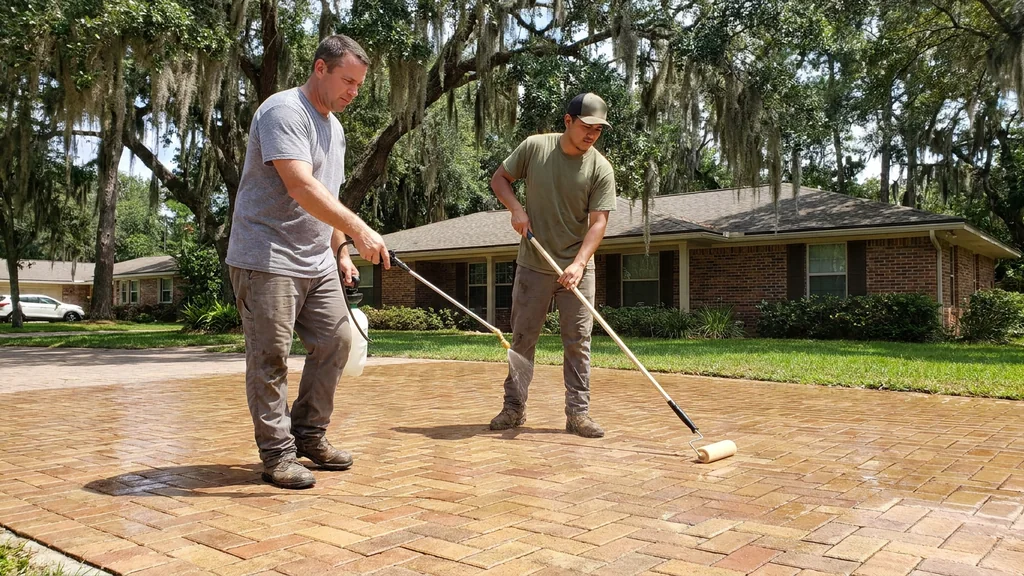
Roll on the chosen finish
The sealer goes on in the matte or wet-look finish you picked. It locks the fresh sand into the joints and helps water bead on top. One Jacksonville company says people can walk on it within hours, while cars wait about a day. Keep pets and patio chairs off until the contractor says it is ready. Sprinklers that hit the pavers should stay off for a while too.
Complete paver services in Cedar Hills
A Cedar Hills job follows a fixed order: treat, wash, sand and seal. Stains and any white bloom get handled first, then the whole surface is cleaned. Fresh sand fills the joints, and the sealer goes on only when everything is dry. To hear how long your layout should take, call (904) 298-7976.
Back patios beside a sliding door wear from foot traffic and furniture. Front walks along a ranch house often stay damp in the shade of the eaves, while driveways take tire marks and oil. Each surface gets its own cleaning plan before one coat ties them together. Tell the contractor which areas matter most when you ask for a free quote.
There are two main finishes, matte and wet look, and two main sealer bases, water and solvent. Matte suits the low lines of a Cedar Hills ranch home, while a wet look deepens red and tan pavers. Whatever sits on the pavers now limits what can go over it. Call (904) 298-7976 to compare finishes for your house.
Most of Jacksonville's rain falls from May to September, so summer dates can slide with the weather. A cooler, drier stretch often makes scheduling easier, since sealer needs a dry surface. One Jacksonville company says its sealer takes about a day to dry fully. To pick a date that fits, ask for a free quote.
Questions to ask before you hire
- What do you do to keep sealer off my plants, pool and walls?
- How long until I can drive or walk on the pavers again?
- Will my pavers look glossy or natural once the sealer dries?
- Is the washing, sanding and any repair work part of the price you gave me?
- If I have a concern after you finish, who do I call?
- Do you put in fresh joint sand before sealing?
- How do you fix a finish that dries cloudy or blotchy?
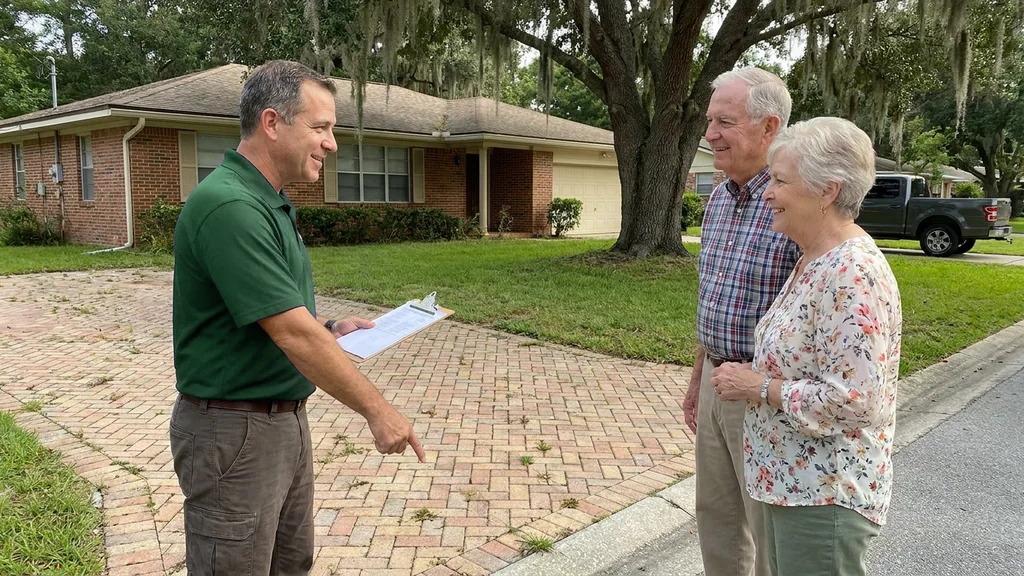
Why local matters in Cedar Hills
A contractor who knows Cedar Hills expects pavers that are much newer than the 1950s homes beside them. That gap means someone may have sealed them once already, maybe more than once. Asking the right questions about past coats prevents a peeling mess later. To reach a contractor who works the Westside, call (904) 298-7976.
Local experience also helps with the layout of these streets. Lots near the drainage ditches and canals shed water in a certain direction, and joints along that path lose sand first. A nearby contractor knows to check along that path before giving you a quote. You can ask for a free quote and ask where your own driveway is losing sand.
Brick and concrete block homes call for careful rinsing near walls and doors. A contractor used to Cedar Hills ranch houses knows where water should and should not go. That care protects screens, door tracks and garden beds. When you ask for a free quote, you stay in charge of the finish, the date and the final decision.
How does the history of Cedar Hills shape its pavers today?
It explains why most patios here are add-ons to older ranch homes. Cedar Hills grew in the 1940s and 1950s, and by 1955 the Cedar Hills Shopping Center made it one of Jacksonville's first big shopping districts outside Downtown. The center once held a JCPenney, an S&S Cafeteria and a movie theater. If your home sits close to it, ask for a free quote for a free look at your pavers.
Nearby landmarks show how long the neighborhood has been settled. Cedar Hills Elementary opened in 1956, the old National Guard Armory became the Mary Lena Gibbs Community Center, and Cedar Hills Park still has its public pool. The Cedar River, which locals call Cedar Creek, winds past it all toward the Ortega River. If you live close to the park or the school, call (904) 298-7976 and tell the contractor your cross street.
Frequently Asked Questions
How much does it cost to seal pavers in Cedar Hills?
Most local companies publish $1.75 to $3.25 per square foot to clean, sand and seal. A small ranch house patio in Cedar Hills often lands at a modest total, while a large riverfront layout costs more. Porous pavers, stains and an old coat can push the rate higher. The free estimate puts a real number on your layout.
Why is paver sealing so expensive in Cedar Hills?
Most of the cost is labor and prep, not the sealer itself. One Jacksonville company says it spends 2 to 3 hours on prep for every hour of sealing. Another says its process takes two days. Stains, efflorescence and refilling every joint all take time on an older Cedar Hills patio. You are paying for hours of careful work you never see in the finished surface.
How often should you reseal pavers in Cedar Hills?
Companies tend to quote two to five years between coats. A patio that sees daily traffic from the sliding door may need it sooner than a side walk. Sprinkle some water on the surface now and then. If it beads, the coat is still working, and if it soaks in, plan the next one. Shade and heavy use both shorten the time between coats.
Should I hire a contractor to seal pavers at my Cedar Hills home?
Yes, because a proper job is more than a coat of sealer. Stains and white bloom get treated, the joints get refilled after washing, and the old coat has to be identified first. One local company says prep takes 2 to 3 hours for each hour of sealing. A free estimate shows what your Cedar Hills pavers need. You decide after seeing the plan.
Will sealing keep weeds and ants out of my Cedar Hills joints?
It helps, though it is not a cure-all. A paver industry article says sealing helps discourage ants and weeds, and a Northeast Florida company says sealer holds joint sand in place to limit weed growth. Full joints matter most. Weeds usually return where sand has washed out again. Keeping the sand topped up between coats helps a lot.
What is the white haze on my pavers, and can it be sealed over?
That haze is likely efflorescence, a chalky bloom that rises out of some pavers. An industry article says it is temporary and fades with weather. It should still be treated before sealing, as one Jacksonville company does, so the coat does not trap it. Point it out at your Cedar Hills estimate. New bloom can still appear later, and it fades with time.
Can the joint sand match my pavers?
Often it can. One Northeast Florida company offers six sand colors and says a shade close to the pavers makes the surface look solid. Another offers colored sand as an upgrade over plain silica. Ask to see samples against your own pavers before the job starts. A good match can make an older Cedar Hills patio look newer.
How long does a paver sealing job take in Cedar Hills?
Plan on about two days of work, plus drying time. One Jacksonville company says its clean and seal takes two days and the sealer needs about 24 hours to dry. Rain can add a day or two. You can usually walk on the surface within hours, but cars wait longer. Ask for a written timeline so you can plan around it.
Ready for a Free Estimate in Cedar Hills?
Call (904) 298-7976 and tell us about your pavers.
Free, no obligations